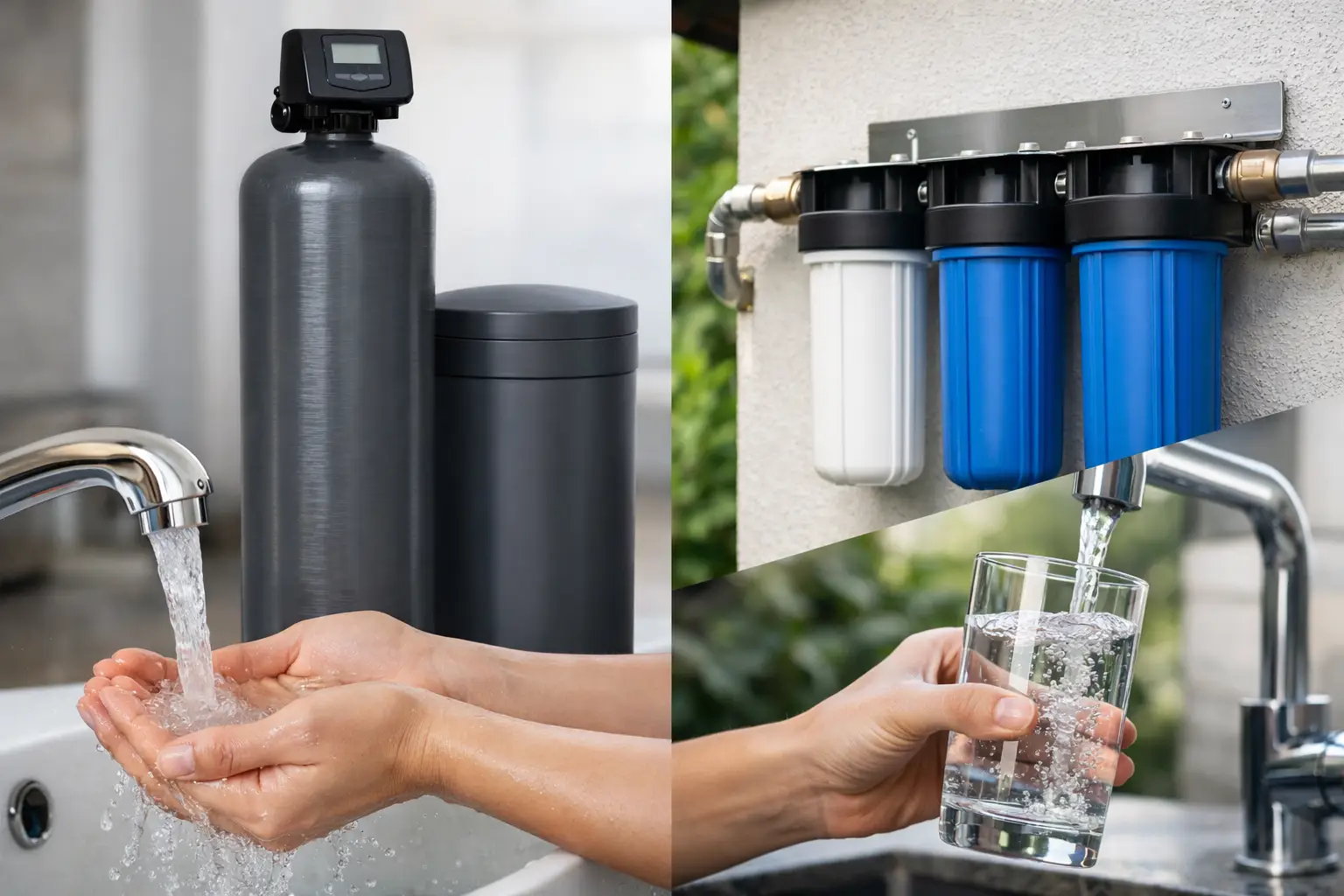
You notice it in small ways first. White marks on the shower screen, soap that never quite rinses clean, a chlorine smell at the tap, dry skin after washing, and kettles or hot water systems showing scale sooner than they should. When comparing a water softener vs filtration system, the real question is not which one is better in general. It is which problem you are trying to solve in your home.
For many Perth households, water issues are rarely just one thing. You might have hard water minerals causing scale and also have chlorine, sediment, or organic matter affecting taste, smell, and overall water quality. That is why this decision deserves a clear, practical explanation rather than a one-size-fits-all answer.
Water softener vs filtration system: what is the difference?
A water softener is designed to deal with hardness. Hard water contains elevated levels of minerals such as calcium and magnesium. Those minerals are not usually a health concern, but they can create a long list of household frustrations. Scale builds up on taps, shower heads, glass, pipes, and appliances. Soap becomes less effective. Hair and skin can feel dull or dry. Over time, plumbing and water-using appliances can work harder than they need to.
A filtration system does a different job. It is designed to reduce unwanted contaminants in the water, which may include chlorine, sediment, rust, organic matter, and in some cases other impurities depending on the media and system design. Filtration is more closely tied to water quality, taste, odour, and the feel of water throughout the home.
Put simply, softening targets minerals. Filtration targets contaminants.
That distinction matters because a filtration system will not always solve hardness, and a softener will not remove everything that affects taste, smell, or whole-home water quality.
When a water softener makes sense
If your biggest issue is scale, a softener may be the right fit. Homes with very hard water often benefit from softening because it reduces the minerals responsible for that chalky build-up. This can help protect hot water systems, dishwashers, washing machines, and pipework over time.
There are also comfort benefits. Softer water generally helps soap lather more easily and rinse better, which some households notice on skin, hair, and laundry. Towels may feel less stiff, and bathroom cleaning can become less of a constant battle.
The trade-off is that a softener is not a complete water quality solution on its own. If your water also carries chlorine, sediment, or odours, those issues will still need to be addressed separately. Softening also usually involves ongoing maintenance requirements, depending on the unit, and that is something homeowners should factor into the decision.
When a filtration system makes sense
If you want better water at every tap, filtration is often the more relevant starting point. A whole-house filtration system treats the water as it enters the property, so the benefits extend beyond the kitchen sink. That means filtered water for showers, bathrooms, laundry, and appliances, not just drinking water from one outlet.
For many households, this approach aligns better with day-to-day living. It can reduce chlorine smell and taste, lower sediment, and improve the overall feel and quality of water used for cooking, bathing, and cleaning. Families often choose whole-house filtration because they are thinking about wellness as much as convenience. Better water is not only about what you drink. It is also about what you shower in, wash your clothes in, and run through your home every day.
A quality point-of-entry system can also support the condition of plumbing fixtures and appliances by reducing the load of sediment and other unwanted matter entering the home. If your concern is broad household water quality rather than hardness alone, filtration is usually the more complete answer.
Water softener vs filtration system for Perth homes
In Perth and wider WA, local conditions make this comparison especially relevant. Many homes deal with a mix of treated scheme water concerns and naturally occurring mineral issues. Chlorine is a common complaint. Sediment can also be an issue depending on the source and the age of local infrastructure. At the same time, hard water minerals are often part of the picture.
This is why the best choice is often not framed as either-or in absolute terms. It depends on the balance of problems in your property. If hardness is extreme, softening may need to be part of the solution. If the bigger concern is chlorine, sediment, odour, and improving water quality across the whole home, filtration should usually come first.
For many homeowners, the smartest path is to start with a proper assessment of what is actually in the water and what outcomes matter most to the household. A family worried about dry skin and chlorine exposure may prioritise whole-house filtration. A homeowner dealing with heavy scale damage in appliances may need to address hardness more directly.
Why whole-house filtration is often the better first step
A lot of homeowners initially look at under-sink filters because they want nicer drinking water. That solves one part of the problem, but only in one place. It does nothing for the showers, bathrooms, laundry, or the water flowing through the rest of the house.
A whole-house filtration system takes a broader view. It treats the water at the entry point, which means the entire home benefits. This is especially valuable when chlorine, sediment, and general water quality are affecting more than taste alone. If your showers leave skin feeling tight, if there is a noticeable odour from the tap, or if you want cleaner water throughout the house rather than at a single outlet, point-of-entry filtration is the more practical long-term option.
It also tends to suit the way busy households prefer to buy. Rather than piecing together separate devices room by room, you get one properly selected system, supplied and installed to suit the property. That reduces guesswork and helps ensure the system is doing the job you actually need.
Can you have both?
Yes, and in some homes that is the right answer. Softening and filtration are not competing technologies in every case. They solve different problems, so they can work together.
If a home has high hardness and also suffers from chlorine, sediment, or unpleasant taste and odour, a combined approach can make sense. The filtration side improves water quality and household comfort, while the softening side addresses mineral scale.
That said, not every home needs both. Installing more equipment than necessary is not good value, and it adds maintenance without adding meaningful benefit. The right setup should match the actual water conditions and the household’s priorities.
What to consider before choosing
The most useful question is not which system sounds more advanced. It is what you want the water to do differently in your home.
If your main complaints are scale marks, mineral build-up, soap performance, and appliance wear, a softener deserves serious consideration. If your concerns centre on chlorine, sediment, taste, odour, and healthier water throughout the house, filtration is likely the better match.
You should also think about coverage. A single-point filter may improve one tap, but a whole-house system supports the bathrooms, laundry, kitchen, and the overall condition of water moving through the home. For homeowners focused on convenience, wellness, and protecting household infrastructure, that broader coverage is often more valuable than a narrow fix.
Installation quality matters as well. Water treatment should not feel like a DIY experiment, especially when it affects the whole property. A professionally selected and installed system gives you confidence that the setup suits your plumbing, local water conditions, and long-term needs.
For households wanting cleaner water across the entire home, a well-designed whole-house filtration solution is often the most practical place to start. Providers such as Aqua Mantra Filters focus on that point-of-entry approach because it delivers benefits where families actually feel them – in the kitchen, the shower, the laundry, and every other tap in the house.
The best water system is the one that solves the problem you live with every day. Once that is clear, the decision becomes a lot simpler.