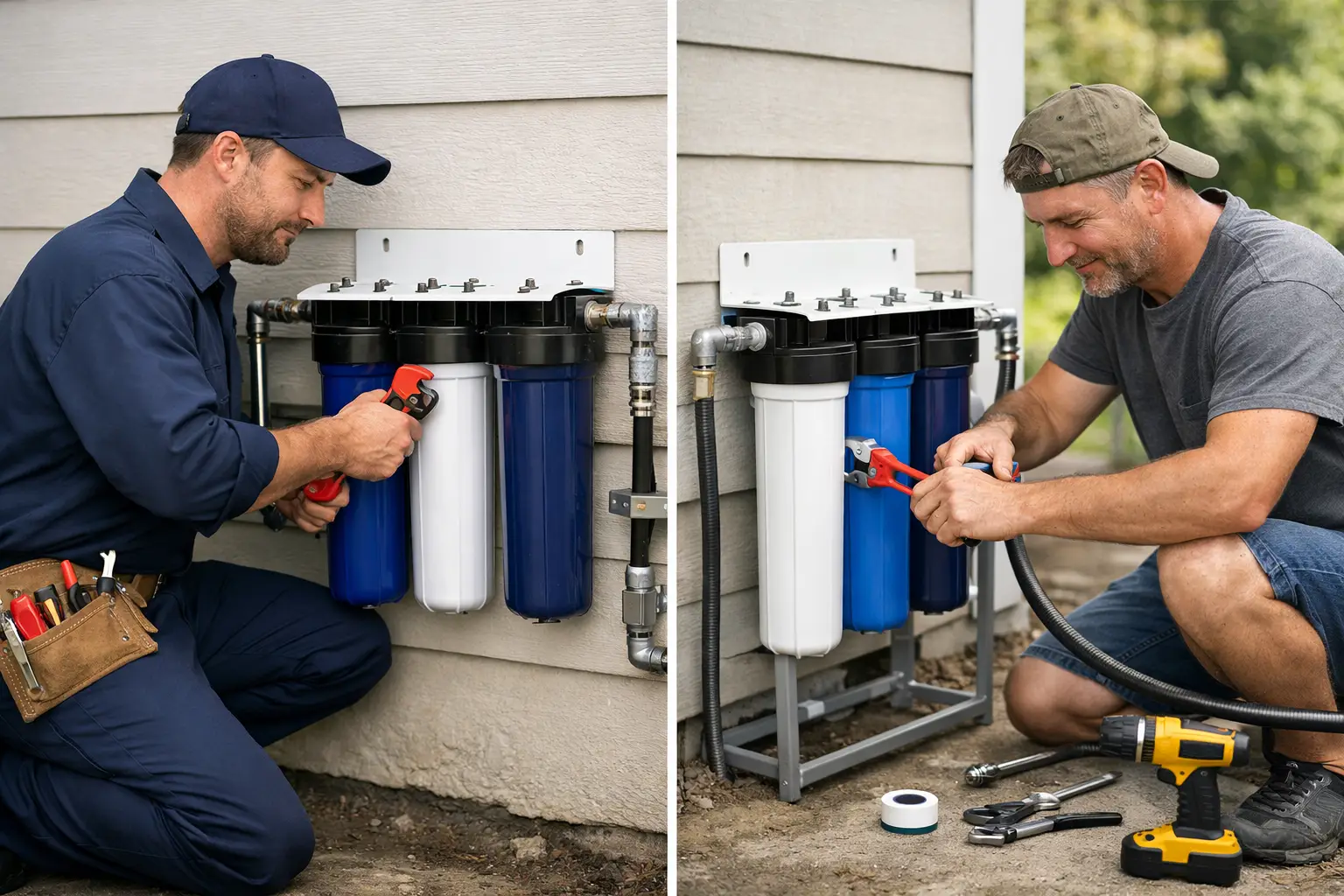
A whole-house water filter looks simple enough on paper – a few housings, some pipe connections, and cleaner water at every tap. But when homeowners weigh up licensed plumber vs DIY water filter installation, the real question is not just whether you can fit the system yourself. It is whether the result will be safe, compliant, effective, and worth living with for years.
For many Perth and WA households, that choice matters more than it first appears. Water conditions can vary from suburb to suburb, and issues like chlorine, sediment, hard minerals, groundwater quality, and scale all affect how a filtration system should be selected and installed. A water filter is not only about taste. It also affects showers, appliances, pipework, and day-to-day comfort across the whole home.
Licensed plumber vs DIY water filter installation: what really changes?
The biggest difference is not the filter itself. It is the quality of the installation and what sits behind it.
A licensed plumber is trained to install the system correctly within your home’s existing plumbing setup. That includes pressure considerations, correct placement, isolation valves, pipe compatibility, leak prevention, and compliance with local plumbing standards. With a whole-house system, the unit needs to be fitted at the right point of entry so filtered water reaches the entire house without disrupting normal water flow.
DIY installation can work in some limited situations, especially with simple benchtop or under-sink products designed for straightforward connection. A point-of-entry filtration system is a different category altogether. It connects to your home’s main water line, which raises the stakes considerably. One small mistake can lead to leaks, pressure issues, poor filter performance, or damage that does not become obvious until later.
The cost question is only part of the story
DIY is often attractive because it appears cheaper upfront. If you are handy and already own tools, it can feel like a sensible way to save on labour. That is understandable.
But with plumbing, the cheapest option at the start is not always the most economical over time. If the system is fitted incorrectly, you may end up paying for a plumber to fix pipework, reposition the unit, replace damaged fittings, or resolve water pressure problems. In the worst cases, a leak can affect walls, flooring, or cabinetry before it is noticed.
Professional installation costs more on day one, but it usually reduces the risk of expensive corrections later. It also gives homeowners confidence that the system was installed to perform as intended, not just attached in place.
Compliance matters more than many homeowners realise
This is where licensed plumber vs DIY water filter installation becomes a practical home protection issue, not just a preference.
In Australia, plumbing work involving the water supply is regulated. Whole-house filtration systems are not the same as swapping a shower head or screwing on a tap accessory. They become part of the home’s plumbing infrastructure. That means compliance, workmanship, and correct installation standards matter.
For homeowners, this is important for two reasons. First, compliant installation helps protect your household water supply. Second, it can matter if there is ever a warranty claim, property sale question, or insurance issue linked to water damage or non-compliant plumbing work.
A licensed plumber is accountable for the work they complete. That layer of responsibility is one of the main reasons many homeowners prefer a supplied-and-installed service rather than piecing it together themselves.
Performance depends on more than connecting pipes
A water filter system can be high quality on its own and still underperform if it is installed poorly.
Whole-house filtration needs to be matched to the home and the water conditions. In WA, that may mean dealing with sediment, chlorine, scale, or organic matter, depending on your supply. The right setup is not just about attaching filter housings to the line. It is about making sure the stages of filtration are suitable, the unit is correctly positioned, and the flow rate supports the needs of the household.
If a system is undersized, badly located, or fitted without proper pressure planning, families may notice reduced flow, uneven performance, or ongoing maintenance headaches. A licensed installer can assess these factors before the system is fitted, which helps avoid disappointment after the fact.
DIY can suit some jobs, but whole-house systems are rarely one of them
There is nothing wrong with being practical around the house. Many homeowners are capable and confident, and some small filtration products are genuinely designed for self-installation.
The problem is that whole-house filtration is not a small job disguised as a simple one. It affects every tap, every shower, and every appliance connected to your water supply. If something is off, the impact is felt throughout the home.
DIY also tends to shift all responsibility to the homeowner. That includes selecting compatible components, checking site conditions, understanding pressure limits, sealing connections correctly, and troubleshooting if something does not work as expected. For busy households, that effort can quickly outweigh the initial saving.
Licensed installation supports wellness and home care
Many families invest in a whole-house system because they want more than better-tasting water. They want water that feels better on skin and hair, less exposure to chlorine, and more protection for taps, hot water systems, and appliances.
Those benefits depend on a system doing its job properly from day one. A poorly installed filter can bypass untreated water, create pressure fluctuations, or fail to manage sediment and scale the way it should. That weakens the very outcomes people are paying for.
Professional installation helps make the system part of a broader home care decision. It is not just a product in a box. It is a water solution set up to support daily comfort, cleaner water use across the home, and longer-term protection for plumbing fixtures and appliances.
When homeowners usually regret DIY
Regret often shows up in ordinary ways rather than dramatic ones. It may be a slow leak that keeps returning. It may be housings installed in an awkward location, making filter changes frustrating. It may be a drop in water pressure during busy times, or confusion about whether the filter stages are even right for the property.
Sometimes the system technically works, but not well enough to justify the spend. That is one of the hidden risks with DIY whole-house filtration. The issue is not always total failure. More often, it is a result that is inconvenient, underwhelming, or difficult to maintain.
That is why many homeowners prefer a service that includes assessment, supply, and installation in one process. It removes guesswork and gives a clearer path to the outcome they actually want.
Why Perth and WA homes benefit from expert advice
Local water conditions matter. A system that suits one property may not be ideal for another, especially if the home relies on mains water in one area, harder water conditions in another, or has concerns linked to sediment, older pipework, rainwater, or bore water setups.
For WA households, a licensed plumber with filtration experience can help identify not only how to install the system, but whether the selected filter stages make sense for the property. That practical guidance is often where the real value sits.
Aqua Mantra Filters takes this supplied-and-installed approach because homeowners generally do not want a complicated plumbing project. They want clean, filtered water throughout the home and the reassurance that it has been fitted properly.
So which option makes sense?
If you are comparing licensed plumber vs DIY water filter installation for a basic portable unit, DIY may be perfectly reasonable. If you are talking about a whole-house filtration system connected to the main water supply, professional installation is usually the smarter choice.
It protects the home, supports compliance, reduces setup stress, and gives the system the best chance of delivering the results you are buying it for. That includes cleaner water at every tap, more confidence in water quality, and fewer headaches later.
For most families, the goal is not to become an expert in filtration plumbing over a weekend. It is to enjoy better water without second-guessing the installation every time they turn on a tap. That peace of mind is often worth far more than the labour cost you were hoping to save.