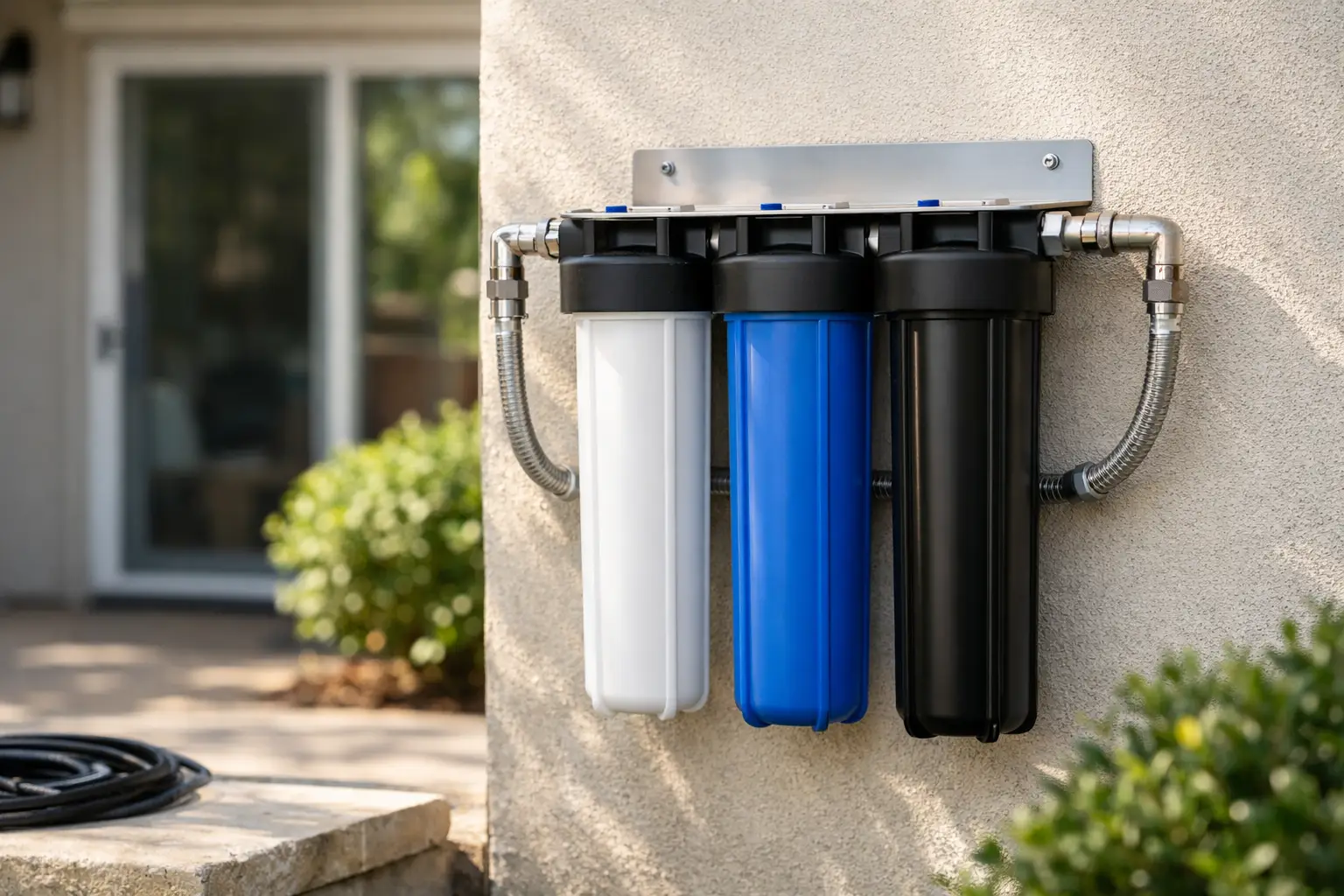
If your shower leaves your skin tight, your kettle scales up too quickly, or the water from one tap tastes different from the next, a three stage whole house filter review is worth more than a quick glance at product specs. For many Perth households, the real question is not whether you need better filtration, but whether a system can improve water quality across the entire home without adding hassle.
A three-stage whole-house system is designed to treat water at the point it enters the property. That means every tap, shower, laundry outlet and appliance benefits from filtration before the water reaches daily use. For homeowners who want a practical upgrade rather than another bench-top filter or under-sink add-on, that matters.
What a three-stage whole-house filter is really doing
The appeal of a three-stage system is straightforward. Each stage tackles a different water issue, so the workload is shared rather than pushed onto a single cartridge. In a well-configured setup, the first stage usually handles larger sediment, the second targets finer contaminants and scale-related concerns, and the third focuses on improving taste, odour and chlorine reduction.
This layered approach is especially useful where water conditions are mixed. In Perth and across WA, households can deal with treated scheme water, bore water influences, sediment, chlorine and mineral-related build-up. A one-size-fits-all filter often struggles because it is trying to solve several problems at once. Three stages give you broader coverage and more consistent performance.
Three stage whole house filter review – where it performs best
In practical home use, the strongest benefit is whole-of-home consistency. Drinking water tastes cleaner, showers feel less harsh, and there is often less visible residue around taps and glass screens. For families, that can translate into a home that feels easier to live in day to day.
The most noticeable improvement for many households is chlorine reduction. If your water has that swimming-pool smell straight from the tap, carbon filtration can make a visible difference in taste and odour. People with sensitive skin or dry hair often notice the shower experience improves as well, although results vary depending on the incoming water quality and the exact media used in each stage.
Sediment control is another area where these systems do well. Fine particles can affect not just drinking water clarity, but also tapware, shower heads and appliances. By capturing sediment earlier in the process, the later filter stages can work more effectively and often last as intended.
Where the review becomes more nuanced is hard water. A three-stage filter can help reduce some of the issues associated with minerals, particularly when the system includes a scale-focused stage, but it is not always a full substitute for a dedicated water softener. If your main concern is severe hardness, it depends on how hard the water is and whether you want full softening or simply reduced scale impact.
What separates a good system from an average one
Not all three-stage systems are built to the same standard. The housing quality, cartridge type, flow rate and installation all affect real-world performance. A system that looks similar online can perform very differently once it is installed on an actual home with actual water pressure.
One of the key differences is filter media. An antibacterial pleated PP filter is useful for sediment and larger particulate matter. A scale carbon block can help address chlorine while also supporting better scale management. A coconut carbon block is often chosen for taste and odour improvement, especially for households wanting cleaner drinking and bathing water throughout the home.
Certification also matters. When a system is WaterMark Certified, homeowners have greater confidence that the product is approved for plumbing and water supply use in Australia. That may sound like a background detail, but it becomes very important when the filter is being connected to the main water line and expected to protect the whole property.
Then there is installation. A high-quality system can still underperform if it is poorly fitted, incorrectly sized or installed without regard to pressure, bypass options and future servicing access. That is one reason many homeowners prefer supplied-and-installed solutions rather than taking a DIY approach.
The trade-offs you should know before buying
A fair three stage whole house filter review should include the trade-offs, because no filtration system is perfect for every home.
The first trade-off is maintenance. Three-stage systems need replacement cartridges at the right intervals to keep working properly. If maintenance is ignored, flow can drop and filtration performance can decline. For busy households, the best option is often a service model that removes the guesswork.
The second is space. These systems need a suitable installation point near the water entry, with enough room for the housing and ongoing access. Most homes can accommodate this, but not every layout is equally convenient.
The third is expectations. A whole-house filter can significantly improve water quality, but it is not a cure-all for every possible contaminant issue. If a property has unusual water conditions, specialised treatment may be needed. That is why an initial assessment matters more than simply buying the biggest system on the page.
How it compares with single-point filters
A common alternative is the under-sink filter. That can improve drinking water at one outlet, but it does nothing for showers, laundry water, bathroom taps or the appliances connected to your main supply. If your concern is only the taste of kitchen water, a single-point filter may be enough.
But if your household is noticing chlorine smell in the shower, residue on fixtures, or general concern about water quality across the property, whole-house filtration is the more complete solution. It treats the cause at the entry point instead of only improving one tap.
That broader protection is a big part of the value. Better water is not just about what you drink. It is also about what touches your skin, runs through your dishwasher, fills your washing machine and moves through the plumbing every day.
Is a three-stage system right for Perth homes?
For many Perth homes, yes – provided the system is matched properly to the local water conditions and installed correctly. Municipal water treatment can leave noticeable chlorine, while some households also deal with sediment or mineral content that affects fixtures and comfort.
A three-stage setup suits homeowners who want a balanced solution. It offers stronger all-round coverage than a basic single-stage unit without jumping straight into more complex treatment than the home may actually need. That middle ground is often exactly what families want: better water, less fuss and clear benefits they can notice around the house.
This is also why a professionally assessed and installed system tends to be the better investment. A licensed plumber can make sure the setup suits your home, complies with requirements and is easy to service later. That reduces risk and gives the system a better chance of delivering the performance you are paying for.
What to look for before making a decision
Start with your actual water concerns. If chlorine is the main issue, carbon performance becomes a priority. If sediment is common, pre-filtration matters more. If scale is affecting taps and appliances, make sure the system has a stage designed to address that concern rather than assuming every carbon filter will do the same job.
Then look at what is included. A good offer should be clear about the filter stages, the installation scope and the replacement requirements. Transparency matters, especially for homeowners who want predictable servicing costs and no surprises later.
Finally, think beyond the unit itself. The best filtration system is the one that gets installed properly, maintained on time and matched to the household’s needs. That is where a service-led provider makes a real difference. Aqua Mantra Filters, for example, focuses on supplied-and-installed whole-house systems so homeowners can improve water quality without having to coordinate product selection and plumbing separately.
A reliable three-stage system is not about adding another gadget to the home. It is about making the water you use every day feel cleaner, gentler and more dependable – from the first glass in the morning to the last shower at night.