You usually notice a water problem long before you test it. It might be the chlorine smell in the shower, scale building up on taps, grit in the water after pipe work, or dry skin that never seems to settle. That is why so many homeowners want to understand how whole house filters work – not as a technical exercise, but as a practical way to improve water at every tap.
A whole-house filtration system is installed at the point where water enters your home. Instead of treating water only at the kitchen sink, it filters the supply before it reaches bathrooms, laundry, hot water systems and appliances. The goal is simple: cleaner, better-performing water throughout the property, with less hassle for the household.
How whole house filters work in a real home
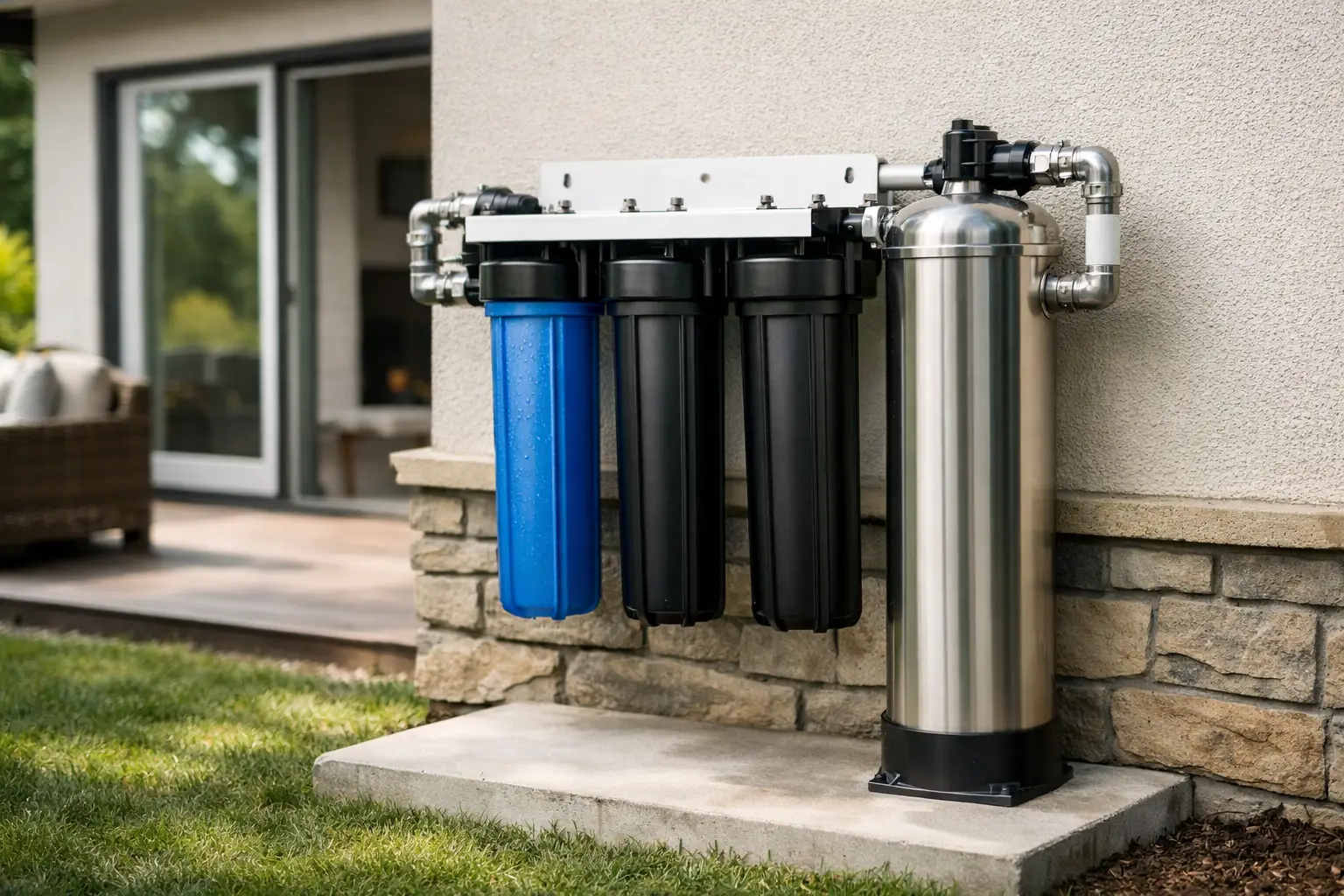
Think of a whole-house filter as a checkpoint for your water supply. As water comes in from the mains, bore, rainwater tank or another source, it passes through one or more filter stages inside a housing system. Each stage is designed to target a different issue, because no single filter media can deal with everything well.
This staged approach matters. Sediment, chlorine, organic matter and scale-forming minerals behave differently in water, so they need different treatment methods. A properly matched system reduces the contaminants that affect taste, odour, comfort and household plumbing, while still maintaining enough flow for normal day-to-day use.
For most homes, the process starts with physical filtration. This stage catches visible particles such as sand, rust, dirt and other sediment. After that, water often moves through carbon-based stages that reduce chlorine, unpleasant smells and some organic compounds. In some systems, an additional stage is included to help manage scale and improve how water performs through the rest of the house.
Why point-of-entry filtration matters
A kitchen filter can improve drinking water, but it does nothing for the shower, the washing machine or the hot water service. Point-of-entry filtration treats the full incoming supply, which means the benefits are spread across the whole home.
That has a direct impact on daily life. Showering in chlorinated water can leave skin feeling tight and hair feeling dry. Sediment can wear down valves and fixtures over time. Hard water minerals can leave scale on taps, inside kettles and through appliances that heat water regularly. When filtration happens at the entry point, you are not just thinking about what you drink. You are also protecting surfaces, plumbing and comfort.
For many Perth and WA households, that whole-of-home approach makes more sense than stacking smaller filters in different rooms. It is cleaner, easier to manage and more consistent.
The role of each filter stage
Most quality systems rely on a 3-stage setup because it offers a balanced level of treatment without becoming overly complex. While the exact configuration depends on water quality and household needs, the principle stays the same: each stage does a specific job.
Stage 1: Sediment filtration
The first stage is there to catch the larger physical particles in the water. This can include sand, silt, rust flakes and general debris. In some homes, especially those with ageing pipework or variable source water, this stage does a lot of heavy lifting.
A pleated polypropylene filter is commonly used here because it traps sediment efficiently and helps protect the stages that follow. If this first barrier was missing, the finer and more specialised filters further down the line would clog more quickly and lose performance sooner.
Stage 2: Scale and carbon treatment
The second stage often focuses on a combination of chlorine reduction and scale control. This is where a scale carbon block filter can be useful. It helps reduce chlorine while also addressing some of the mineral-related issues that contribute to scale build-up.
This stage can make a noticeable difference in everyday water use. Water may smell cleaner, hot water appliances may face less mineral stress, and tapware can be easier to maintain. It is not the same as a full water softener, and that distinction matters. If a home has very hard water, additional treatment may be needed. But for many households, a well-designed scale-reduction stage delivers meaningful improvement without overcomplicating the system.
Stage 3: Fine carbon filtration
The final stage is usually a polishing step. A coconut carbon block filter is often used to further reduce chlorine, taste and odour issues, along with finer impurities that can affect water quality. This stage helps deliver a cleaner finish before the water moves through the home.
Because carbon filtration works by adsorption rather than simply straining particles out, it is especially effective for improving how water smells and tastes. That can be valuable not only for drinking water, but also for the general feel of water used in showers and baths.
What whole-house filters remove – and what they do not
One of the biggest misconceptions around filtration is that every system does everything. It does not. The answer depends on the water source, the filter media and the way the system is configured.
A typical whole-house filter can reduce sediment, chlorine, unpleasant odours and some organic matter. Depending on the design, it may also help with mineral scale. That makes it a strong option for households dealing with treated municipal water, common water quality complaints and general home protection concerns.
What it may not do is remove every dissolved contaminant, bacteria, heavy metal or salt-related issue. Some homes need UV sterilisation, reverse osmosis, softening or other specialised treatment on top of filtration. That is why water assessment matters. The right system is not about buying the biggest setup on the market. It is about matching the treatment to the actual problem.
Flow, pressure and everyday performance
A good whole-house filter should improve water quality without making the home frustrating to use. That means the system needs to be sized properly for the property. If the filter is too small for the household’s demand, pressure drop can become noticeable, especially when multiple taps or showers are running at once.
This is another reason professional installation matters. A licensed plumber can assess pipe sizing, flow requirements and the best location for the unit. That helps the system work properly from day one and avoids the kind of shortcuts that create future headaches.
Placement also matters for maintenance and weather protection. The system should be installed somewhere accessible enough for filter changes, while still being protected and compliant.
Why maintenance is part of how whole house filters work
Filters work well because they collect and hold what you do not want in your water. Over time, that means they fill up. If cartridges are not replaced when needed, water flow can drop and filtration performance can decline.
Maintenance intervals depend on water quality, household usage and the type of cartridges in the system. A home with heavy sediment may need earlier replacement than a home on relatively clean mains water. That is normal. Filter life is never one-size-fits-all.
This is where a service-led approach gives homeowners peace of mind. Instead of guessing when to change cartridges or trying to sort out fittings yourself, it is far easier to have the system supplied and installed properly, then maintained on schedule. For many families, convenience is not a bonus. It is the reason they choose whole-house filtration in the first place.
Who benefits most from whole-house filtration?
Whole-house filters suit homeowners who want more than just better-tasting drinking water. They are especially useful for households noticing chlorine smell, sediment, scale, dry skin, dull hair, stained fixtures or appliance wear linked to water quality.
They also make sense for people who want a neater, more reliable solution than juggling benchtop jugs, shower filters and under-sink units. One system at the entry point can simplify water treatment across the property.
For families, there is also a lifestyle benefit that is easy to appreciate. Better water does not stay in one room. It moves through showers, baths, washing, cooking and cleaning. That broad benefit is what makes point-of-entry filtration such a practical investment.
Aqua Mantra Filters focuses on this whole-home approach because it solves the issue where it starts – at the point your water enters the house. When the system is chosen well and installed correctly, the result is cleaner water, less stress on plumbing and a home that simply feels better to live in.
If you have been putting up with chlorine odour, scale or sediment because it seemed too hard to fix, this is the part worth remembering: the best filtration systems are not about adding complexity. They are about making good water feel normal in every room of the house.