You notice chlorine before you test for it. It is there in the smell when the shower starts, in the taste of a glass from the kitchen tap, and sometimes in the way skin feels tighter after washing. For many households, the search for the best water filters for chlorine removal starts with drinking water, but the real question is whether you want better water at one tap or across the entire home.
What makes the best water filters for chlorine removal?
Chlorine is widely used to disinfect mains water, and it does that job well. The trade-off is that it can affect taste, odour, and everyday comfort. In homes across Perth and wider WA, chlorine often sits alongside sediment, hard minerals, and other water quality issues, so the best filter is rarely the one that removes only one thing on paper. It is the one that suits your water source, household size, and how you actually use water day to day.
For chlorine removal, carbon-based filtration is usually the key. Activated carbon, carbon block, and coconut carbon media are commonly used because they adsorb chlorine effectively and improve taste and smell. That said, not all carbon filters perform the same way. Contact time matters, filter size matters, and flow rate matters. A small cartridge can help at a kitchen tap, but it will not deliver the same result as a properly sized point-of-entry system treating all the water entering the home.
The main filter types to consider
If you are comparing the best water filters for chlorine removal, there are three common categories: jug or benchtop filters, under-sink filters, and whole-house systems. Each has a place, but they solve different problems.
Jug and benchtop filters
These are the entry point for many households because they are inexpensive and easy to start with. They can reduce chlorine in drinking water and improve taste, which is useful if your main frustration is the flavour of tap water. They are also simple for renters or anyone wanting a quick fix.
The limitation is reach. They only treat the water you pour through them, so they do nothing for showering, laundry, bathroom taps, or appliance protection. They also rely on regular cartridge changes, and performance can drop if maintenance is delayed.
Under-sink filters
Under-sink systems are a step up if your priority is cleaner drinking and cooking water from the kitchen tap. They usually offer better filtration capacity than a jug and can provide more consistent chlorine reduction. For households that mainly want better-tasting water without clutter on the bench, they are a practical option.
Still, they remain a point-of-use solution. If chlorine is also affecting your skin, hair, or the general feel of water throughout the home, an under-sink filter only solves part of the problem. It is effective, but narrow in scope.
Whole-house filtration systems
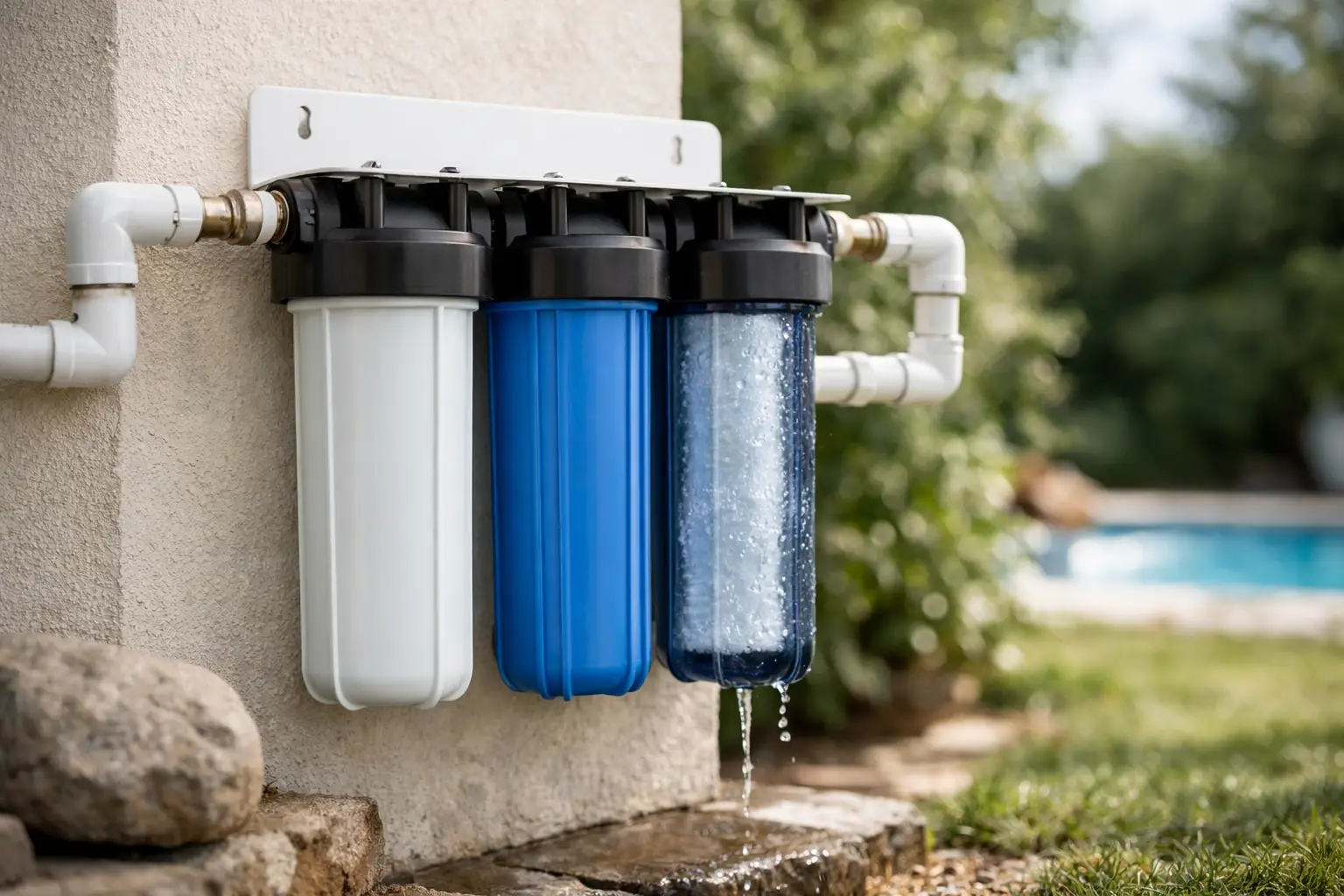
A whole-house or point-of-entry system filters water as it enters the property. That means the kitchen, bathrooms, showers, laundry, and outdoor taps can all benefit, depending on the setup. For families concerned about chlorine exposure beyond drinking water, this is usually the most complete answer.
This approach is particularly relevant where local water conditions include more than chlorine alone. A well-designed multi-stage system can address sediment first, then chlorine and organic matter, and in some cases help reduce the impact of scale-forming minerals. That wider treatment profile is why many homeowners see whole-house filtration as both a wellness decision and a home protection decision.
Why whole-house systems often make more sense for families
If one person in the home dislikes the taste of tap water, a kitchen filter may be enough. If the household is noticing dry skin, brittle hair, cloudy glassware, scale build-up, or unpleasant water odour in several areas of the home, the value equation shifts.
A whole-house system deals with the source before the water reaches any tap. That matters because chlorine exposure is not limited to what you drink. You shower in it, wash clothes in it, rinse fruit and veg in it, and run it through hot water systems, dishwashers, and other appliances. Filtering at entry point creates a more consistent water experience across the property.
For busy homeowners, there is also a convenience factor. Instead of managing multiple small filters in different places, you have one central solution designed for the household’s flow rate and usage. When it is supplied and installed properly, it becomes a low-fuss part of the home rather than another job on the list.
What to look for in a chlorine removal system
The right system depends on your water and your expectations, but a few features are worth paying close attention to.
A staged setup is usually stronger than a single-cartridge approach. Sediment should be removed early so carbon stages can work more effectively and last longer. Carbon block or high-quality carbon media is essential for chlorine reduction, and the quality of the housing and fittings matters if you want long-term reliability.
Certification is another key point. WaterMark Certified components provide confidence that the system is suitable for plumbing use in Australia. This becomes even more important when a filtration system is being integrated into your home’s main water line.
Professional installation should not be treated as an afterthought. Flow rate, pipe size, placement, drainage considerations, and ongoing service access all affect performance. A licensed plumber can make sure the system is installed safely, compliantly, and in a way that supports proper filtration without causing pressure issues around the home.
Local water conditions change the answer
There is no single product that is automatically the best for every home. Perth and WA households often deal with a mix of treated scheme water, groundwater, and rainwater setups, and each brings different challenges.
With mains water, chlorine is often the headline issue, but sediment and hardness can also play a role. In bore or groundwater applications, the conversation may expand to include iron, odour, and staining. With rainwater, filtration may need to focus more on sediment and biological risks depending on collection and storage conditions.
That is why a quick online comparison can only take you so far. Two systems might both claim chlorine reduction, yet one may be better suited to a small apartment while the other is built for a larger family home with several bathrooms. The better question is not simply which filter is best, but which filter is best for your water source, your property, and your daily use.
A practical benchmark for choosing well
For homeowners wanting a reliable long-term solution, a 3-stage whole-house system is often the strongest starting point. In practical terms, this kind of setup can combine a pleated sediment stage to catch dirt and particles, followed by carbon-based stages designed to reduce chlorine, improve taste and odour, and support better water quality throughout the home.
That style of system also suits households that want more than drinking water improvement. It can support better shower water, less residue around fittings, and reduced strain from sediment and contaminants moving through pipes and appliances. When paired with the right replacement filters and maintenance schedule, it gives consistent performance instead of short-term improvement.
For this reason, many homeowners looking at the best water filters for chlorine removal end up choosing a whole-house solution over a single-tap unit. It asks for a bigger upfront commitment, but it solves a wider set of problems in one go.
When a smaller filter is still the right choice
Not every home needs full entry-point filtration straight away. If you are in a unit, renovating in stages, or only concerned with drinking water taste, an under-sink system may be the sensible move. It is also a fair option if budget is the main deciding factor and you want meaningful chlorine reduction without changing the whole plumbing setup.
The key is being honest about what success looks like. If your goal is fresh-tasting water from the kitchen, a smaller system can do that well. If your goal is to improve water quality across showers, basins, laundry, and appliances, it will fall short.
Choosing service, not just hardware
A filtration system is only as good as its fit for the home and the support behind it. That is why many households prefer a provider that can assess local water conditions, recommend a suitable system, and handle installation properly rather than leaving everything to guesswork.
Aqua Mantra Filters takes that service-led approach with supplied and installed whole-house systems designed for local conditions, which removes a lot of the friction homeowners worry about. It means fewer unknowns, better compliance, and a clearer path to ongoing maintenance when replacement filters are due.
The best choice is usually the one that keeps working quietly in the background while your water tastes better, smells cleaner, and feels easier on the home. If chlorine has become something you notice every day, that is often the sign it is time to treat the whole water experience, not just the glass in your hand.