A glass of water can look clear and still leave you with a chlorine smell, a flat taste, or that dry feeling on your skin after a shower. For many Perth households, that is the real issue. When people ask how to clean drinking water, they are usually not asking for a chemistry lesson. They want water that feels safer, tastes better, and supports a healthier home without turning it into a weekend DIY project.
The right approach depends on what is actually in your water. Municipal supply, bore water, rainwater and older plumbing all create different problems. Some homes are dealing with sediment and rust, others with chlorine and organic matter, and plenty also notice scale from hard minerals. Cleaning drinking water properly means matching the treatment method to the problem, not just buying the first filter you see.
How to clean drinking water based on the source
If your water comes from scheme water, the most common concerns are chlorine taste and odour, fine sediment, and mineral content that can affect kettles, taps, hot water systems and even your skin and hair. In this case, filtration is usually the most practical answer because the water is already treated for disinfection. What many families want is a second stage of refinement that improves quality at the point it enters the home.
If your water comes from a bore or rainwater tank, the answer can be different. Bore water may carry more sediment, minerals and staining compounds. Rainwater can be affected by debris from roofing, tank contamination or bacterial risk if maintenance has slipped. In those situations, filtration may need to be combined with disinfection, regular tank cleaning or a more tailored treatment plan.
That is why one-size-fits-all advice can be misleading. Boiling helps in some situations, but it does not remove sediment, chlorine, scale or dissolved minerals. A jug filter may improve taste, but it only treats a small volume and does nothing for the rest of the house. The best method depends on whether your goal is emergency safety, everyday convenience or whole-home water quality.
The main ways to clean drinking water
For short-term or emergency use, boiling is the simplest option. Bringing water to a rolling boil can help kill bacteria, viruses and parasites. It is useful during a water quality alert or when you are unsure about microbial safety. But it has limits. It will not remove heavy sediment, chlorine, hard minerals or chemical tastes, and it is not practical for daily whole-house use.
Activated carbon filtration is one of the most effective options for improving taste and odour in treated household water. Carbon media helps reduce chlorine and can also lower some organic compounds that affect the smell and flavour of water. This is often the difference people notice first – water tastes cleaner, tea and coffee improve, and the chlorine smell at the tap is reduced.
Sediment filtration is another important step, especially in homes with visible particles, ageing pipes or local supply issues. A quality sediment filter can catch rust, sand, silt and other particulates before they reach your glass, your shower head or your appliances. This is not just about drinking water. It also helps protect plumbing fixtures and reduce wear on household systems.
For homes dealing with hard water effects, scale reduction matters as well. Hard minerals may not always make water unsafe to drink, but they can create build-up through the home and affect how water feels on the skin. In many Perth properties, this is part of the bigger water quality picture. If you only treat the kitchen tap, you leave the rest of the problem untouched.
Why single-tap filters are not always enough
A benchtop or under-sink filter can help if your only concern is the taste of drinking water. It is a step up from untreated tap water and can suit renters or small households. The trade-off is that it only improves one outlet. Your bathroom taps, showers, laundry, dishwasher and hot water system still receive the same untreated supply.
That matters more than many people realise. Chlorine, sediment and mineral content affect more than what you drink. They can influence skin comfort, hair condition, scale build-up and the lifespan of fixtures and appliances. If your water issues show up across the whole home, a single-point solution often feels like a partial fix.
How to clean drinking water for the whole home
For homeowners who want a more complete result, point-of-entry filtration is often the smarter long-term option. This means the water is filtered as it enters the property, so every tap benefits. It is a cleaner, simpler setup for families who want consistency throughout the house rather than managing separate filters in different places.
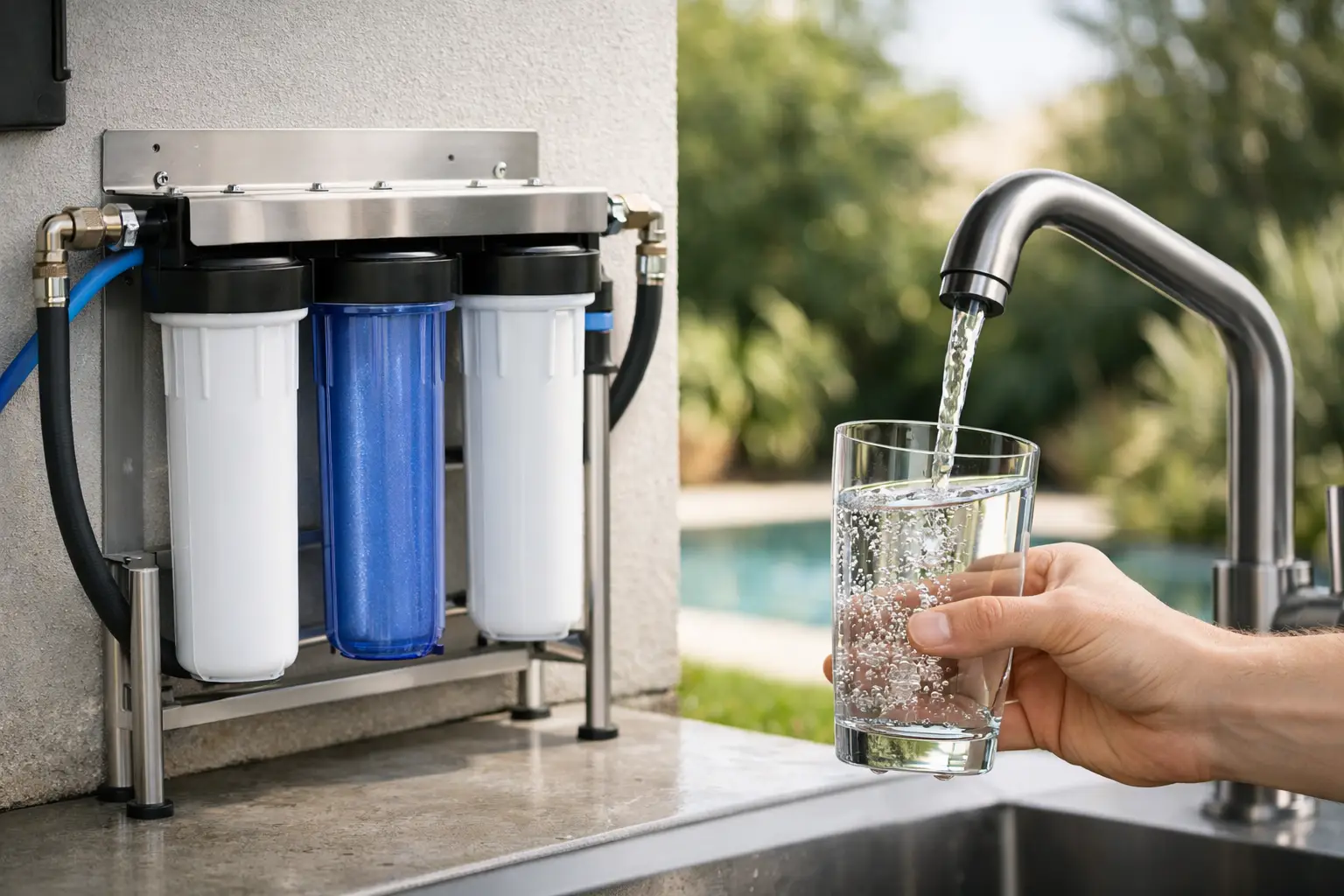
A staged filtration system is especially effective because each filter has a clear job. One stage can target sediment, another can reduce chlorine and odour, and another can assist with scale and finer impurities. This layered approach is more dependable than relying on one filter to do everything.
In practice, that usually means cleaner drinking water, better tasting water from the kitchen, less sediment around the home, and less stress on plumbing and appliances. It also improves everyday convenience. You are not refilling jugs, replacing multiple small cartridges or wondering which tap is safe to use for cooking.
A practical example for Perth households
In Perth and across WA, many homes are dealing with a mix of treated scheme water concerns rather than a single contamination event. Chlorine is common. Sediment can appear depending on local infrastructure and plumbing condition. Hard water effects are also familiar, particularly when scale starts showing up on shower screens, kettles and tapware.
That is where a professionally selected whole-house system makes sense. A three-stage setup with an antibacterial pleated PP filter, a scale carbon block filter and a coconut carbon block filter can address multiple household concerns in one coordinated system. It treats water at entry, not just at one point of use, which is a better fit for families focused on wellness, convenience and home protection.
Professional installation makes a real difference
If you are serious about how to clean drinking water properly, installation matters almost as much as the filtration media itself. Even a quality system can underperform if it is poorly sized, fitted in the wrong location or installed without regard to pressure, flow and compliance.
That is why many homeowners prefer a supplied-and-installed solution. A licensed plumber can assess the home, recommend the right configuration and fit the system correctly from the start. It removes guesswork and gives you confidence that the setup is suitable for your water conditions and household demand.
There is also the question of maintenance. Filters do not last forever, and replacement timing depends on water quality, usage and the type of cartridge installed. Ongoing support is valuable because it keeps performance consistent. Water should not start tasting off again just because a cartridge has quietly reached the end of its service life.
What to look for before choosing a system
Start with your actual symptoms. If the water smells like chlorine, tastes unpleasant, leaves scale behind or contains visible sediment, those are useful clues. If your skin feels dry after showering or your appliances are showing mineral build-up, that points to a broader household issue rather than a kitchen-only problem.
Next, think about your goal. If you only want occasional backup treatment, boiling or a simple drinking water filter may be enough. If you want cleaner water across the home, better comfort in the bathroom, and more protection for plumbing and appliances, whole-house filtration is the more appropriate path.
Finally, consider who is installing and supporting the system. Certified products, local knowledge and licensed installation are not marketing extras. They are part of getting a reliable result. For many households, the easiest path is to work with a provider that can assess the water issue, supply the system and install it properly in one service.
Aqua Mantra Filters focuses on exactly that approach, helping households improve water quality at every tap with professionally installed whole-house systems designed for local conditions.
Clean drinking water should not feel like a patchwork of temporary fixes. The best solution is the one that suits your home, your water source and the way your family actually lives. When the water is cleaner from the moment it enters the property, every sip, shower and load of washing feels like a better standard of living.