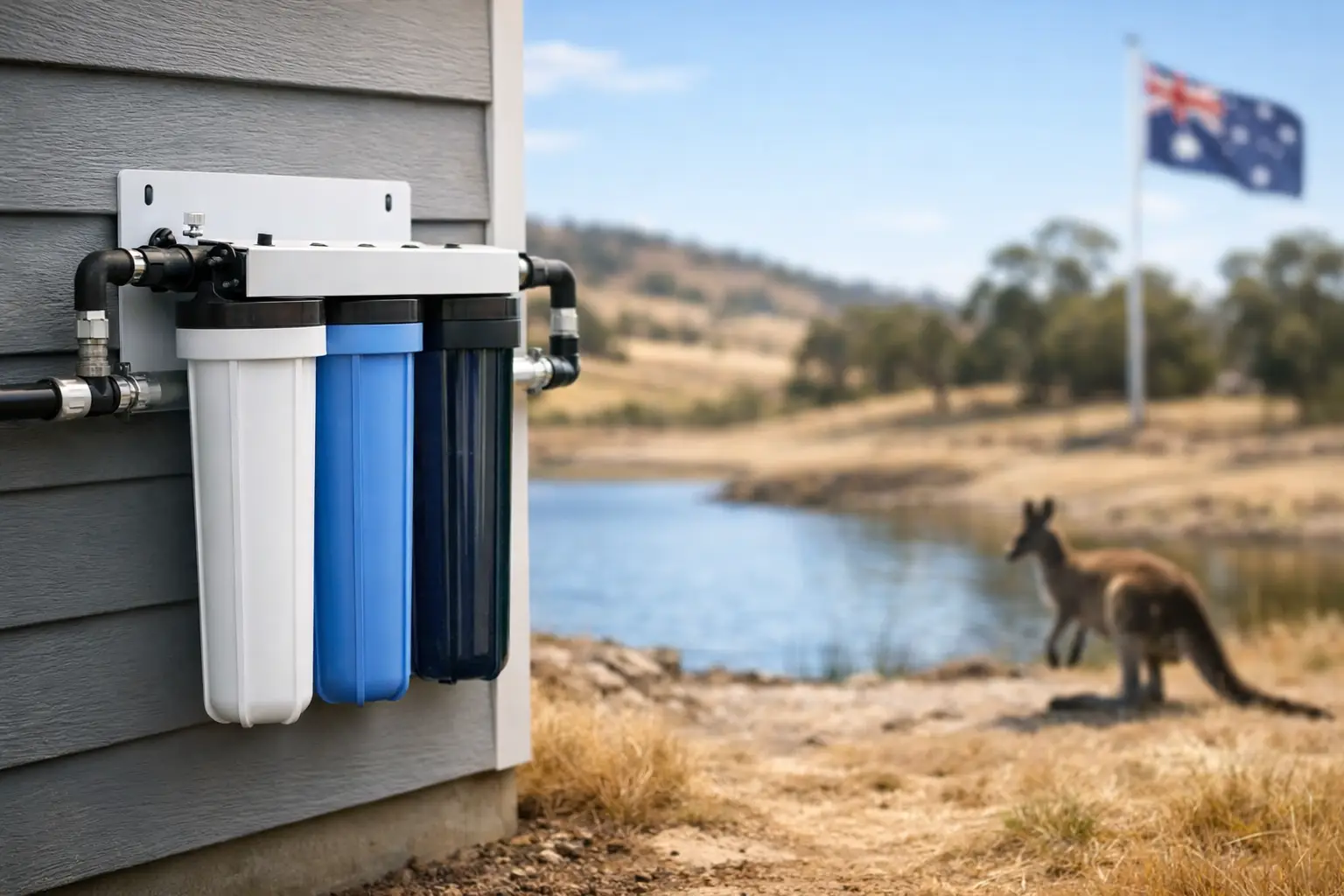
Turn on the tap in one Australian suburb and the water is clear, well-managed and pleasant to drink. In another, it may be safe by regulatory standards but still smell of chlorine, leave scale on the kettle, or carry sediment after infrastructure works. So, is access to fresh clean drinking water a problem in Australia? The honest answer is yes in some places, no in others, and for many households the real issue sits somewhere in between.
Australia is not a country with a single water story. City water, regional supply, bore water, rainwater tanks and ageing pipes all shape the water people actually use at home. That matters because most families are not asking an abstract policy question. They want to know whether the water coming from their taps is clean, tastes right, supports their health, and protects their plumbing and appliances over time.
Is access to fresh clean drinking water a problem in Australia or a quality problem?
For many Australians, the challenge is less about having no water at all and more about having water that does not feel fresh, clean or pleasant to live with every day. Municipal water supplies in major metro areas are generally treated and monitored, but treatment does not automatically equal ideal household water quality. Chlorine, mineral content, sediment and organic matter can still affect taste, odour and day-to-day comfort.
In practical terms, that means a family may technically have access to drinking water, while still avoiding the tap because of smell, flavour or skin irritation after showering. It also means homeowners can be dealing with scale build-up, stained fixtures or reduced appliance life even when the water meets basic supply standards.
That distinction matters. Safety standards are one part of the picture. Lived experience is another.
Why water access varies across Australia
Australia’s geography puts pressure on supply and consistency. It is one of the driest inhabited continents in the world, and rainfall is uneven. Some communities depend on dams, some on desalination, some on groundwater, and others on rainwater storage. Each source comes with different treatment needs and different trade-offs.
In major cities, supply is usually more stable, but distribution systems can still influence what arrives at the tap. Older pipe networks, maintenance work and local water chemistry all affect quality. In regional and remote areas, the issue can be more pronounced. Distance, infrastructure costs and environmental conditions can make reliable access harder to maintain.
For households in Western Australia, these differences are especially relevant. Depending on the area, people may notice strong chlorine, hardness, sediment or a general decline in water taste and feel. That does not always mean the supply is unsafe. It does mean the water may be less enjoyable to drink and less gentle on the home.
Regional and remote communities face a different challenge
When people ask whether access to fresh clean drinking water is a problem in Australia, regional and remote communities are often at the centre of that discussion. These areas can face higher costs, fewer infrastructure upgrades and more complicated source conditions. Water may be trucked in, heavily treated, drawn from bores or stored for long periods.
That can create a gap between what is available and what people would reasonably call fresh clean drinking water. Reliability, taste and trust all become issues, not just availability.
Urban homes can still have real water quality issues
Even in established suburbs, water concerns are common. Chlorination is necessary for disinfection, but many households dislike the taste and smell. Hard water can contribute to dry skin, dull hair and mineral build-up on taps, shower screens and appliances. Sediment may appear after pipe disturbances or from local supply conditions.
This is why homeowners often say, “the water is fine, but we do not like using it.” That is not a minor complaint. Water affects drinking, cooking, bathing, cleaning and the long-term condition of the home.
What “fresh clean drinking water” means at home
Fresh clean drinking water is not just about passing a lab test. For most households, it means water that looks clear, tastes pleasant, smells neutral and feels better to use throughout the home. It should support confidence, not second-guessing.
If you are filling bottles from the kitchen but still buying cartons of water from the supermarket, that usually signals a trust or quality problem. If your shower leaves your skin tight and your hair harder to manage, that points to a broader household water issue. If your kettle scales up quickly or your fixtures show mineral marks, the water is affecting the home as much as the people living in it.
That is why point-of-use solutions, like a small filter under one sink, are only part of the answer for some families. If the concerns extend to bathrooms, laundry, hot water systems and appliances, treating the water at the point it enters the home often makes more sense.
The most common household water issues in Australia
Across Australian homes, a few concerns come up again and again. Chlorine is one of the biggest. It plays an important role in disinfection, yet it can noticeably change taste and odour. Hard minerals are another frequent issue, especially in parts of WA, where they can leave scale deposits and affect skin, hair and appliance performance.
Sediment also matters more than many people realise. Fine particles can make water look less appealing, contribute to wear on plumbing fixtures and interfere with the overall feel of household water. Organic matter and other trace contaminants can add to odour or taste complaints depending on the source and local conditions.
None of these issues should be brushed off simply because water is available. Access without confidence is not the same as access with comfort and peace of mind.
So, is access to fresh clean drinking water a problem in Australia for homeowners?
For homeowners, the answer often comes down to this: Australia has broad access to supplied water, but not every home has water that feels genuinely fresh and clean across every tap. That is why so many people look beyond the question of supply and focus on treatment at home.
If your household water has a chlorine smell, visible sediment or hard water effects, waiting for the wider system to change is rarely practical. Families want a reliable solution they can put in place now, one that improves drinking water while also supporting better showers, cleaner fixtures and protection for plumbing and appliances.
This is where a whole-house approach becomes relevant. Rather than filtering one outlet and leaving the rest of the home untreated, a point-of-entry system addresses water before it travels through the property. That means the kitchen, bathrooms, laundry and other taps all benefit.
Why whole-house filtration makes sense in many Australian homes
A whole-house filtration system is not necessary for every property, but for many households it is the most practical response to ongoing water quality concerns. If the problem is isolated to taste at the kitchen sink, a small localised filter may help. But if chlorine, sediment or mineral issues affect daily living more broadly, a whole-home system is the better fit.
The benefit is not just cleaner drinking water. It is also the convenience of having treated water available throughout the house, without juggling separate solutions for cooking, showering and appliance protection. For busy families and homeowners who value hassle-free results, that simplicity matters.
Professional installation matters too. Water treatment performs best when the system matches the property, the source water and the household’s actual concerns. A licensed plumber can assess the setup properly, install the system to standard and reduce the risk of shortcuts that create problems later.
For WA households dealing with chlorine, hardness and sediment, this kind of practical, supplied-and-installed approach is often what turns a frustrating water experience into a reliable one. It is also why companies like Aqua Mantra Filters focus on whole-house systems rather than quick fixes at a single tap.
What to consider if you are concerned about your water
If your water tastes off, smells chemical, leaves residue or affects your skin and hair, it is worth taking seriously. Start with what you notice day to day. Taste, odour, scale, sediment and fixture build-up are all useful signs. Your location, water source and plumbing condition also play a part.
The right solution depends on the cause. Chlorine concerns call for different treatment from heavy sediment or mineral hardness. That is why a proper assessment is more useful than guessing or choosing the cheapest option online. The goal is not just filtration for its own sake. It is getting water that works better for your health, your home and your routine.
Australia has made major investments in water supply, and many households receive water that meets official standards. But standards do not always reflect what families experience at the tap each day. If your water is making you buy bottled water, scrub scale, replace appliances early or put up with unpleasant taste and smell, that is a real problem worth fixing. Better water at home should feel simple, dependable and good to live with every day.