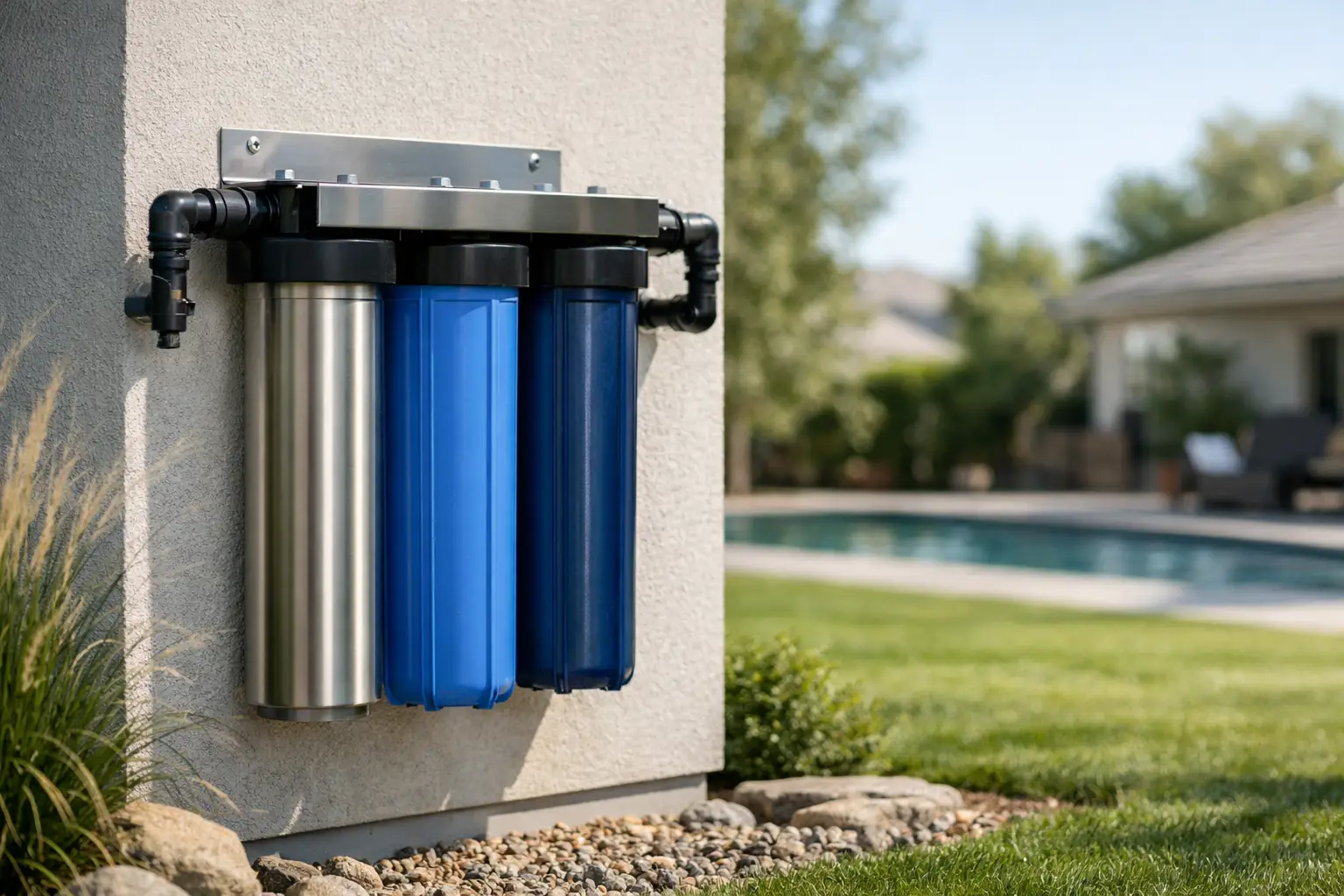
If your shower leaves your skin tight, your kettle scales up too quickly, or your tap water carries a strong chlorine taste, a whole-house water filter systems comparison is the right place to start. For many Perth households, the question is not whether water treatment helps. It is which system actually suits the water coming into the home, the people living there, and the level of protection you want across every tap.
What a whole-house system is really meant to do
A whole-house water filter, also called a point-of-entry system, treats water as it enters your property. That means your kitchen, bathrooms, laundry and outdoor taps can all benefit from cleaner water. This is very different from a single under-sink unit that only treats drinking water at one outlet.
For families, that difference matters. You are not only thinking about taste in a glass of water. You are also thinking about what is coming through the shower, what is washing your clothes, what is running through your hot water system, and what your appliances are handling every day.
The right system can help reduce chlorine, sediment, organic matter and, depending on the setup, the effects of hard water minerals. That can mean better-tasting water, less residue around fixtures, improved comfort for skin and hair, and less strain on plumbing and household appliances.
Whole house water filter systems comparison – what actually matters
When comparing systems, many homeowners get shown filter claims without enough context. The better way to compare is to look at performance in real household conditions.
1. What contaminants the system is designed to address
Not all whole-house systems target the same issues. Some are mainly built for sediment. Others focus on chlorine and taste. Some are configured to support homes dealing with a broader mix of sediment, hard minerals and organic matter.
In Perth and across WA, water conditions can vary between suburbs and supply types. Mains water often brings chlorine concerns. Bore, rainwater or mixed supply setups can introduce different sediment loads and water quality issues. A system that works well in one home may not be the best fit in another.
That is why a proper comparison starts with your water source and your goals. If your main complaint is chlorine odour, carbon filtration matters. If your issue is visible grit or fine particles, sediment filtration matters. If limescale is causing trouble for taps and appliances, scale reduction should be part of the conversation.
2. How many stages the system uses
A single-stage unit may be enough for basic sediment reduction, but it usually will not deliver the same level of treatment as a properly designed multi-stage system. Three-stage systems are popular because they allow each filter to do a specific job rather than asking one cartridge to handle everything.
A typical three-stage setup may include a pleated sediment filter to catch larger particles, followed by carbon-based stages that target chlorine, odour, taste and finer impurities. This layered approach usually provides better water quality and more balanced filter performance over time.
That said, more stages are not automatically better. What matters is whether each stage has a clear purpose and whether the configuration matches the water entering your home.
3. Filter media quality
This is one of the biggest differences between systems that look similar on paper. Cartridge type affects both filtration performance and service life.
Antibacterial pleated PP filters are useful where sediment capture and hygiene are priorities. Carbon block filters are commonly used to reduce chlorine, odours and organic compounds. Coconut carbon block filters are often chosen for strong adsorption performance and improved taste outcomes.
A good comparison looks beyond labels. It asks whether the media is suitable for the intended use, whether the cartridges are certified, and whether replacement filters are readily available.
Installation is part of the system, not an extra
One of the most overlooked parts of any whole house water filter systems comparison is installation quality. Even a strong filtration setup can underperform if it is installed poorly, undersized for the property, or placed without proper attention to plumbing layout and access.
For most homeowners, this is not a DIY purchase. It is an integrated service decision. You want the system supplied correctly, installed by a licensed plumber, and set up in a way that supports safe operation and straightforward maintenance.
That matters for performance, but it also matters for confidence. A professionally installed system reduces the risk of leaks, pressure issues and compliance problems. It also means the homeowner is not left trying to interpret fittings, pipework and changeover requirements alone.
For households that want a hassle-free result, professional supply and installation is often the better value option, even if the upfront price is higher than an online unit sold in a box.
Comparing maintenance costs properly
A cheaper system is not always the cheaper system to own. Ongoing maintenance is where the real comparison becomes clearer.
Filters need replacing at intervals based on water quality, usage and cartridge type. If your home has higher sediment levels, some stages may need more frequent attention. If replacement cartridges are difficult to source or expensive, long-term ownership costs rise quickly.
It is also worth asking how easy the system is to service. Can the filters be changed without major fuss? Is there support available when the time comes? Does the provider offer replacement components suited to the original setup?
A well-supported system with clear maintenance scheduling often gives households a better experience than a bargain unit with uncertain after-sales support.
Water pressure, flow and household size
This is where trade-offs matter. A stronger filtration setup should still allow the home to function comfortably. If a system is undersized, you may notice poor pressure when multiple taps are running or when the shower and washing machine are used at the same time.
Larger households, homes with multiple bathrooms, and families with high daily usage need a system sized for that demand. The goal is to improve water quality without creating frustration elsewhere in the home.
When comparing systems, ask how the unit handles normal household flow rates. A good provider will consider the number of occupants, bathrooms, appliances and general usage before recommending a final setup.
Comparing outcomes, not just hardware
The best system is not necessarily the one with the most technical claims. It is the one that solves the problems you actually notice every day.
For some households, that means softer-feeling showers, less chlorine smell and better-tasting drinking water. For others, it is about reducing build-up on taps, supporting appliance life, and making the whole home feel better to live in.
This is why service-led providers often offer a better path than simple product sellers. They can match the system to local conditions, explain what the setup is designed to improve, and avoid overpromising on issues that may require a different treatment approach.
Aqua Mantra Filters takes this practical approach by focusing on supplied-and-installed whole-house systems that support both water quality and household performance, without turning the process into a technical guessing game for the customer.
So which type of system suits most homes?
For many Perth homes on treated mains water, a three-stage whole-house filtration system is a strong balance of performance, convenience and value. It can address common concerns such as chlorine, sediment and general water quality across the home while supporting better taste, comfort and protection for plumbing fixtures and appliances.
If your property has specific water challenges, such as very high sediment loads or more noticeable hardness issues, the right setup may need some adjustment. That is where a one-size-fits-all comparison falls short. The better question is not just which system is best overall. It is which system is best for your home, your water source and your expectations.
A worthwhile comparison should leave you with clarity, not more confusion. If a provider can explain what is in the system, why each stage is there, how it will be installed, and what upkeep to expect, you are usually looking at a more dependable choice. Cleaner water should feel like a smart household upgrade, not another job to manage.