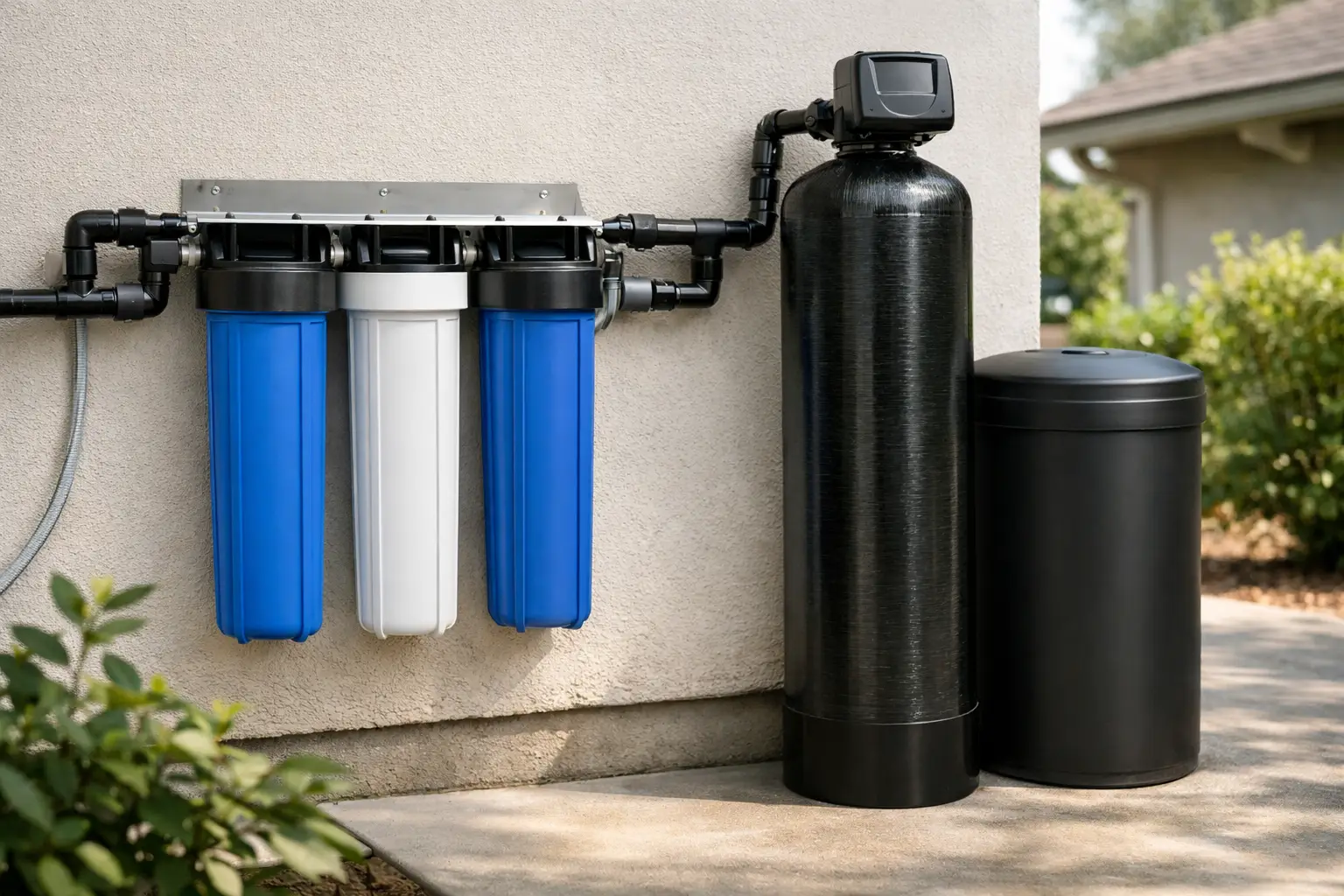
If your shower leaves your skin tight, your kettle scales up too quickly, and your tap water carries that familiar chlorine smell, the issue usually is not one fixture – it is the water entering your home. That is why many Perth households start looking at whole house water filtration systems with softener, not just under-sink filters that only treat one tap.
For families across Western Australia, water quality is rarely a single-problem situation. You may be dealing with chlorine from mains supply, sediment from ageing infrastructure, or hard minerals that leave white marks on glass, taps and shower screens. A properly selected point-of-entry system can address these issues at the source, so the water reaching your bathrooms, laundry, kitchen and appliances is cleaner and easier on the home.
Why homeowners choose a whole-house approach
Treating water at the entry point changes the experience of the entire house. Instead of filtering only your drinking water, a whole-house system supports better water quality for bathing, washing clothes, cleaning, cooking and protecting fixtures.
That matters more than many people realise. Chlorine and sediment are not just taste issues. They can affect how water smells, how your skin and hair feel after showering, and how quickly filters, taps and appliances wear over time. When hard water is part of the picture as well, the result can be ongoing scale build-up in hot water systems, dishwashers, washing machines and plumbing.
A system that combines filtration with softening is often the right fit when households want both wellness benefits and home protection. It is not about adding complexity for the sake of it. It is about solving more than one water problem in a single, practical setup.
What whole house water filtration systems with softener actually do
A filtration system and a water softener do related but different jobs. Filtration is designed to reduce contaminants such as sediment, chlorine and organic matter. Softening targets hardness minerals like calcium and magnesium that contribute to scale.
When these functions are combined, you get broader coverage across the home. The filtration stages help improve taste and odour while reducing the particles and chemicals that can affect water quality. The softener then helps manage the mineral content that causes hard water issues.
For many homes, this pairing delivers the best everyday result. Water feels gentler in the shower, soap works more effectively, white spotting is reduced, and appliances are less exposed to mineral deposits. At the same time, your household is not relying on a single drinking tap to carry the full burden of water treatment.
The real benefits in day-to-day living
Most homeowners do not buy a system because they enjoy comparing filter media. They buy one because they want the practical annoyances to stop.
Filtered and softened water can make a noticeable difference to shower comfort, especially for people with dry or sensitive skin. Hair often feels less brittle, and soap and shampoo tend to rinse more cleanly. In the kitchen, water can taste fresher and smell cleaner, which matters if your mains supply has a strong chlorine character.
The benefits extend beyond personal comfort. Hard water can shorten the life of household appliances by allowing scale to build up internally over time. Taps, showerheads and pipework can also show the effects. Reducing that mineral load helps protect the investment you have already made in your home.
For busy households, there is another advantage – convenience. When water is treated at the point of entry, every tap benefits without the need to manage multiple small filters around the house.
Whole house water filtration systems with softener: is it always the right choice?
Not every home needs the same setup, and this is where a lot of buyers get tripped up. A combined solution makes sense when your water has both quality and hardness issues. If your main concern is chlorine or sediment alone, a well-designed multi-stage filtration system may be enough. If hardness is severe, softening becomes more important.
Water source also matters. Mains water, groundwater and rainwater all present different challenges. A household in Perth connected to municipal supply may be focused on chlorine taste and odour, while another property may be dealing with sediment or a different mineral profile. The right system depends on what is actually in your water and what outcomes matter most to your family.
That is why a proper consultation is more useful than guessing from online product lists. Water treatment should be matched to the home, not copied from a generic package.
What to look for in a system
Start with the basics: certified components, a clear treatment purpose, and a provider that can explain what each stage is doing. A quality whole-house setup often includes multiple filtration stages to tackle different contaminants progressively, rather than asking one cartridge to do everything.
For example, sediment filtration helps capture dirt, rust and particulates before they move through the home. Carbon stages can then help reduce chlorine, odours and some organic compounds. If hard water is also an issue, the softening stage sits alongside that filtration strategy to reduce scale-forming minerals.
Just as important is build quality and installation standard. A water filtration system is connected to your home’s plumbing, so it needs to be supplied and installed correctly. This is not only about performance. It is also about compliance, reliability and making sure the system can be serviced properly over time.
Why professional installation matters
A whole-house system should feel like an upgrade, not a project you have to manage. Professional installation removes a lot of the risk and uncertainty, especially when pipework layout, water pressure and positioning all affect how the system performs.
A licensed plumber can assess the best installation point, make sure flow rates are appropriate, and ensure the system is fitted in line with local requirements. That matters in Australian homes where outdoor placement, sun exposure and available space can all influence durability and servicing access.
For most homeowners, the value is simple. You want clean water and peace of mind, not a weekend spent trying to work out fittings, bypass valves or pressure issues. A service-led approach saves time and reduces the chance of getting an expensive decision wrong.
Maintenance is part of the value
No filtration system is set-and-forget. Filters need replacing, and any softening component must be maintained in line with the system design. That is not a drawback – it is simply how water treatment keeps performing properly.
The key is choosing a setup with straightforward maintenance and support. Replacement intervals depend on water quality, water usage and the type of cartridges installed. A household with higher sediment load may need more frequent servicing than one on relatively clean supply.
This is another reason local experience matters. A provider familiar with Perth and WA water conditions can recommend a realistic maintenance schedule instead of offering one-size-fits-all promises.
A smarter way to think about cost
Price matters, but the cheapest option is rarely the best value in whole-house water treatment. A low-cost unit that does not match your water conditions, lacks proper certification, or is installed poorly can become expensive very quickly.
It helps to think in terms of total household benefit. Better water across every tap, reduced scale-related wear, improved taste and odour, and less frustration with skin, hair and cleaning results all add up. If the system is also professionally installed and easy to maintain, it tends to deliver stronger value over the long term.
For homeowners planning to stay in their property, that broader value often outweighs the appeal of a small, short-term saving.
A well-chosen whole-house solution should make home life feel easier from the moment the water turns on. If your household is dealing with chlorine, hard water or sediment, the right system is not just about filtration – it is about creating healthier, better-performing water for the way you live every day.