If your shower leaves your skin tight, your kettle scales up too quickly, or your tap water carries a strong chlorine smell, the problem usually is not at one outlet – it is across the whole home. The best whole house water treatment systems are designed to treat water at the point it enters your property, so every tap, shower and appliance benefits from cleaner, better-balanced water.
For many Perth households, that matters more than a small under-sink filter ever could. Local water conditions can bring a mix of chlorine, sediment, minerals and organic matter that affect not just taste, but also your plumbing, hot water system, laundry, bathrooms, skin and hair. Choosing the right system is less about chasing a trendy product and more about matching the treatment to the water your home actually uses every day.
What makes the best whole house water treatment systems?
A good system does two jobs well. First, it targets the contaminants or water characteristics causing the issue in your home. Second, it does that reliably without creating extra hassle, pressure loss or complicated maintenance.
That is why the best whole house water treatment systems are rarely the cheapest box on the market. They need to be sized correctly, built with quality filter media, and installed properly so the system performs as intended. For homeowners, the real test is simple – does it improve water quality throughout the home while protecting plumbing and making daily life feel better?
In practice, the best systems tend to share a few qualities. They are certified for residential use, built for Australian conditions, and configured in stages so different problems can be addressed in the right order. They also come with clear servicing requirements rather than vague claims that sound good at the point of sale.
Why a 3-stage system suits many Australian homes
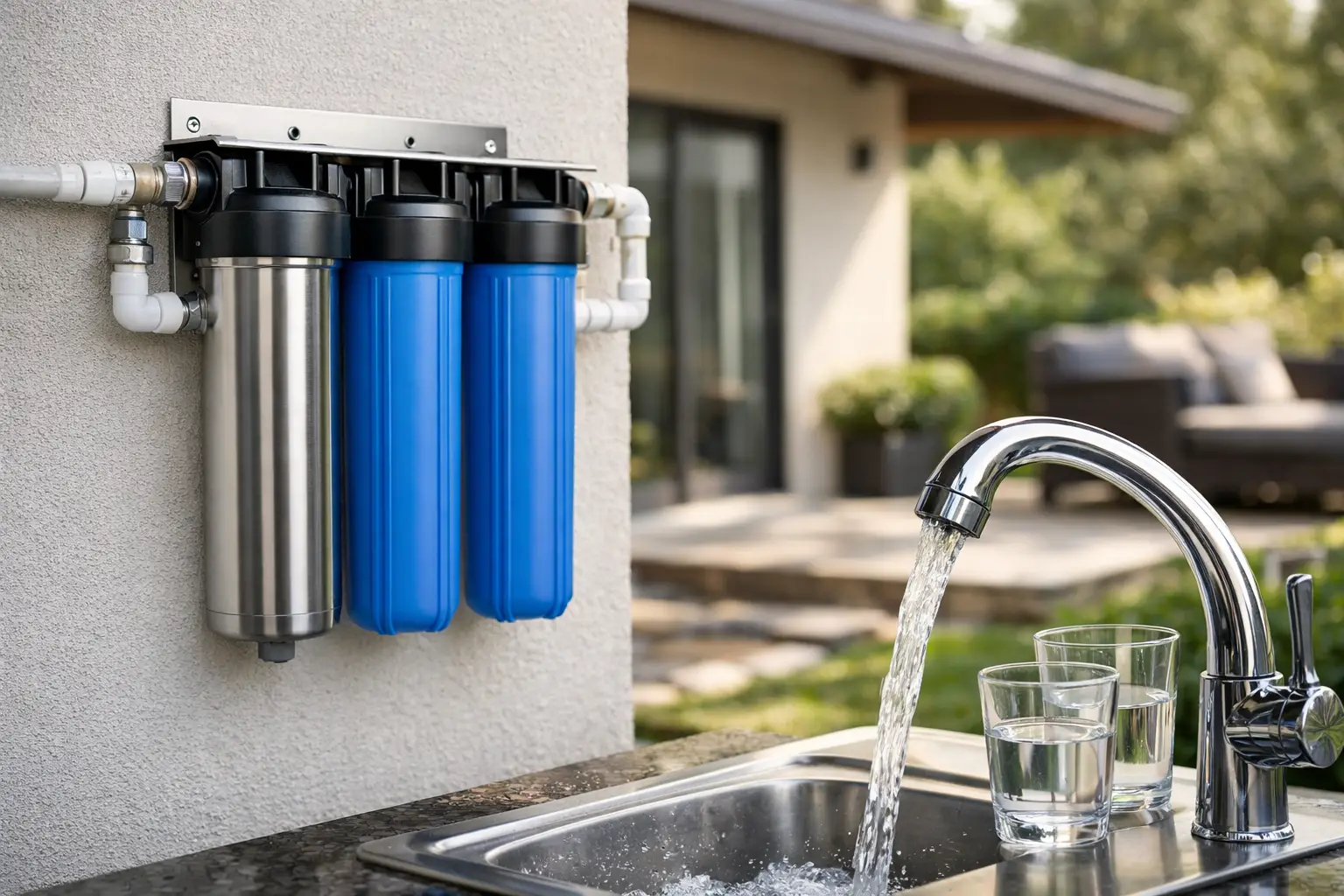
For most households on mains water, a 3-stage point-of-entry setup is a practical and effective starting point. It gives water several treatment steps before it reaches your taps, which is important because one filter type alone usually cannot manage everything well.
A typical 3-stage arrangement begins with sediment reduction. This stage helps catch dirt, rust, sand and other particulates before they move deeper into the system or through your plumbing. In areas where sediment levels fluctuate, that first barrier can make a noticeable difference to both water clarity and filter performance.
The second and third stages are often designed to address chlorine, organic matter, odours and scale-related concerns. Carbon-based filtration is especially useful here because it can improve taste and smell while also reducing chemicals that make water less pleasant to drink, shower in or wash with.
This layered approach is one reason professionally selected systems often outperform one-size-fits-all units. A 3-stage design can be balanced to suit local conditions rather than relying on a single cartridge to do every job poorly.
The main water problems a whole-house system should address
Not every home has the same water concerns, even within the same suburb. Still, there are a few common issues that usually shape the decision.
Chlorine taste and odour
Chlorine is one of the biggest complaints in treated municipal water. It helps make water safe to distribute, but it can also leave a noticeable smell and taste. In a whole-house setting, chlorine reduction matters beyond drinking water. It can affect showers, baths and even the way washing feels on clothes and linen.
Sediment and visible particles
Sediment may come from ageing infrastructure, bore water influences, rainwater systems or general supply variation. Even when it is not dangerous, it can make water look less appealing and contribute to wear inside plumbing fixtures and appliances.
Scale and hard water effects
Hard water does not always mean unsafe water, but it can be harsh on your home. Minerals can build up on taps, shower screens, kettles and heating elements. Over time, that scale can reduce appliance efficiency and add to maintenance costs. Some filtration systems help reduce the effects of scale, though severe hardness may require a more specialised solution.
Organic matter and general water quality
Some homes need broader treatment for unpleasant taste, smell or water quality issues linked to organic contaminants. This is where the right carbon media and cartridge combination becomes important. The goal is not just cleaner drinking water, but water that feels better throughout the home.
Best whole house water treatment systems for different needs
The phrase best whole house water treatment systems can be misleading if it suggests there is one perfect option for everyone. The better question is which system is best for your water source, household size and priorities.
For many families on Perth mains water, a 3-stage whole-house filtration system is the strongest all-round choice. It offers broad protection against sediment, chlorine and common organic matter, while also supporting better water for bathing, laundry and appliance use.
If your main concern is hard water and scale, you may need a setup that goes beyond standard filtration. Filtration can help with some symptoms, but heavy mineral content sometimes calls for dedicated hardness treatment. That is a case where proper assessment matters, because oversimplified advice can leave the core issue unresolved.
Homes using rainwater or alternative water sources may also need a different cartridge combination or pre-treatment approach. Water quality can vary more widely in these systems, so the best result usually comes from tailoring the filtration stages to the source.
Why installation matters as much as the system itself
Even a quality filtration unit can underperform if it is installed poorly. Pipe sizing, flow direction, bypass setup, pressure considerations and access for future servicing all matter. This is one of the biggest differences between a true whole-house solution and a DIY purchase that looks similar on paper.
Professional installation gives homeowners more certainty. It helps ensure the system complies with plumbing requirements, works safely with your existing setup and is positioned for straightforward filter changes later on. It also removes the guesswork around what has actually been fitted and whether it suits your property.
For households that value convenience, this matters a lot. A supplied-and-installed system is not only about saving time. It is about confidence that the water treatment has been selected and fitted properly from day one.
What to look for before you buy
A whole-house filtration system is a home service decision, not just a product decision. Before choosing one, it helps to look past headline claims and focus on the details that affect long-term value.
Start with what the system is designed to reduce. If the messaging is broad but vague, ask what each stage actually does. A quality provider should be able to explain, in plain language, how sediment filtration, carbon filtration and scale-related treatment work together.
Next, consider certification and build quality. WaterMark Certified components and suitable residential-grade housings matter because the system is being connected to your home’s water supply, not used as a temporary add-on.
Maintenance should also be clear from the start. Every filter system needs replacement cartridges at appropriate intervals. That is normal, not a drawback. The key is knowing what needs replacing, how often, and whether ongoing support is available.
The home and wellness benefits people notice first
Most homeowners first think about drinking water, but the daily benefits of whole-house treatment usually show up in more places. Water that is lower in chlorine and sediment can be more pleasant to shower in. Many people notice their skin feels less dry, their hair feels softer, and their bathrooms are easier to keep clean.
There are also household benefits that build over time. Cleaner water can help protect plumbing fixtures, reduce sediment-related wear and ease the burden on appliances that use heated water. That does not mean every issue disappears, but it can improve how your home performs day to day.
For families, there is also peace of mind in knowing the water is being treated before it reaches every tap. That whole-of-home approach makes sense when the goal is not only better taste, but better living conditions throughout the property.
Choosing a provider, not just a filter
When comparing systems, the provider matters just as much as the equipment. You want clear advice, professional installation and support after the job is done. That is especially true if your home has specific water issues or if you want a solution that is matched to local conditions rather than pulled from a generic catalogue.
Aqua Mantra Filters takes this service-led approach by supplying and installing whole-house filtration systems designed for residential performance, with licensed plumbing and practical support built into the process. For homeowners, that reduces friction and helps turn a technical purchase into a straightforward home improvement.
The right water treatment system should feel like a lasting upgrade, not another thing to manage. If your water is affecting how your home feels, functions or ages, getting the right advice early can make every tap in the house work harder for your wellbeing.