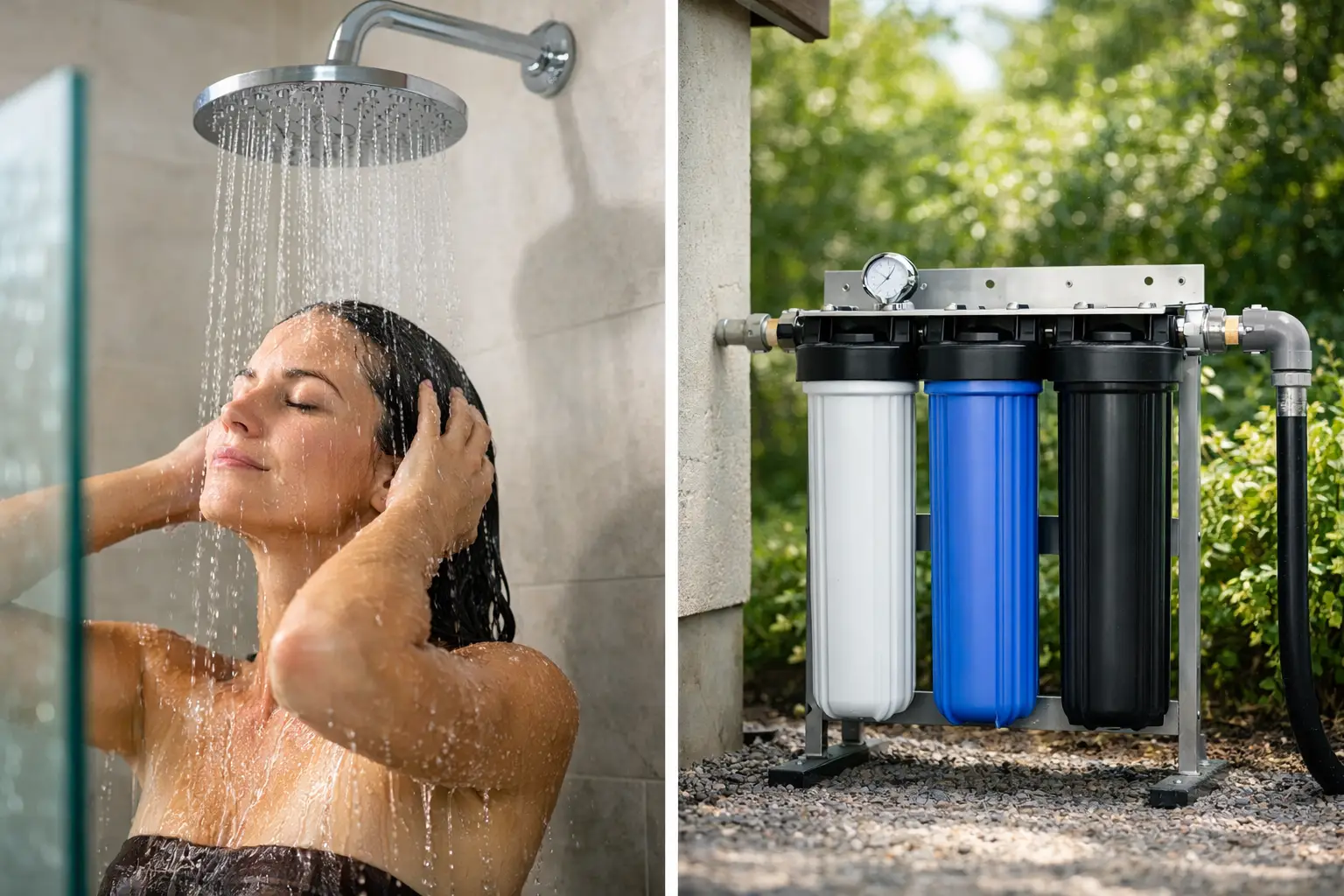
If your skin feels tight after a shower, your hair turns dry faster than it should, or the bathroom carries that familiar pool-like smell, chlorine is often part of the problem. For many Perth households, learning how to reduce chlorine in shower water is less about luxury and more about everyday comfort, skin health and protecting the home’s water quality from the moment it enters the property.
Chlorine is commonly added to mains water to control bacteria and keep supply safe. That matters, but there is a trade-off. Once it reaches your home, that same chlorine can affect how water feels on the skin, how hair behaves, and even how pleasant a shower is day to day. The right solution depends on whether you want a quick improvement at one shower or a more complete fix for the whole house.
Why chlorine in shower water becomes a household issue
A shower exposes your body to more than just the water touching your skin. Warm water creates steam, and that can make chlorine odour more noticeable in an enclosed bathroom. Some people are more sensitive than others, but households often notice the same pattern – dry skin, frizzy or brittle hair, irritated scalps and a stronger chemical smell than they would like.
In Western Australia, local water conditions can make the experience worse. If chlorine is combined with sediment, hard minerals or other impurities, water can feel harsher overall. That is why treating chlorine alone sometimes helps, but treating the broader water quality at the point of entry can make a much bigger difference across the home.
How to reduce chlorine in shower water at the source
The most effective way to reduce chlorine in shower water is to remove or significantly lower it before the water reaches your bathroom. This is where the difference between a shower-only filter and a whole-house system really matters.
A shower filter is usually the simpler starting point. It is installed at one outlet and is designed to reduce chlorine for that individual shower. For renters or households wanting a short-term option, this can be appealing. It is relatively low commitment and can improve odour and water feel fairly quickly.
But there are limits. A shower filter only treats one point, so your bath, laundry, kitchen and other bathrooms still receive untreated water. Performance can also vary depending on water pressure, flow rate and how consistently the filter is maintained. If your household is dealing with chlorine across multiple taps, this kind of fix may feel too narrow.
A whole-house filtration system addresses the problem much earlier – where water enters the property. This means chlorine reduction is not limited to one showerhead. Every tap and outlet can benefit, including bathrooms, the kitchen, laundry and outdoor points where relevant. For homeowners who want a cleaner, more consistent water experience throughout the home, this is usually the stronger long-term option.
Shower filters versus whole-house filtration
Choosing between these two approaches comes down to what matters most in your home.
If your concern is one bathroom only, and you want the most basic path forward, a shower filter may be enough. It can be a practical step for testing whether chlorine is affecting your comfort. If skin or hair improves within a few weeks, that gives you a clearer sense of the role water quality is playing.
If you own your home and want broader benefits, whole-house filtration generally delivers better value over time. Instead of solving one symptom in one room, it treats the household water supply more comprehensively. That can support better shower water, better drinking water, less chlorine smell from taps, and added protection for plumbing fixtures and appliances.
This matters because chlorine is often not the only issue present. In many homes, sediment and mineral content also contribute to water that feels aggressive or leaves build-up behind. A properly selected point-of-entry system can be designed to reduce multiple problems at once rather than addressing them in isolation.
What type of filtration helps reduce chlorine?
Carbon-based filtration is one of the most common and effective ways to reduce chlorine in household water. Carbon media works by adsorbing chlorine and certain organic compounds as water passes through it. In practical terms, that means less chemical odour, a gentler feel on skin and hair, and improved water quality throughout the home.
Not all systems perform the same way, though. The quality of the filter media, the size of the system and the contact time between water and carbon all affect results. A small cartridge at a showerhead has less treatment capacity than a properly sized whole-house setup.
Multi-stage systems can also offer a stronger result because chlorine reduction is handled alongside sediment and other contaminants. For example, a system that includes pleated sediment filtration and carbon block stages can help remove particles first, then reduce chlorine more effectively in the following stages. That layered approach can improve both filtration performance and filter life.
Signs your current approach is not enough
Some households already use a benchtop filter or under-sink system and assume that covers their water concerns. It does not help your shower. If bathroom water still smells like chlorine, or your skin still feels irritated after washing, the treatment point is too limited.
Another sign is constant maintenance frustration. If a shower filter clogs quickly, loses pressure or seems to stop making a noticeable difference, your water may need a more suitable system for the conditions coming into the home. High sediment loads, mineral content and flow demands can all reduce the effectiveness of smaller filters.
A good filtration setup should make life easier, not add another household job you have to think about every week.
How to choose the right solution for your home
The best answer depends on your property, your water source and what outcome you care about most.
If your priority is healthier-feeling skin and hair, chlorine reduction is a sensible place to start. If you also want better tasting water, less staining, reduced sediment and more protection for hot water systems and appliances, then it makes sense to think bigger than the shower alone.
Homeowners in Perth often benefit from a local assessment rather than guessing. Water quality can vary by suburb, supply type and household plumbing conditions. A system should be matched to those realities, not chosen on marketing claims alone.
Professional installation also matters more than many people expect. Even an excellent filtration system can underperform if it is poorly fitted, incorrectly sized or installed without regard to water pressure and flow requirements. A supplied-and-installed solution removes that uncertainty and helps ensure the system performs as intended from day one.
Why whole-home treatment often makes more sense
When families ask how to reduce chlorine in shower water, they are often really asking how to make water feel better everywhere. That includes the kitchen tap, the ensuite, the kids’ bathroom and the laundry. Once you look at the issue that way, a whole-house system becomes easier to justify.
It supports wellness and convenience at the same time. You are not managing separate filters room by room or wondering which tap is treated and which one is not. You also get the benefit of professional system selection based on your home’s actual needs.
For households planning to stay in their property, the long-term value is usually stronger than piecemeal fixes. Better water quality can contribute to more comfortable showers, less chlorine smell indoors, and reduced exposure to the impurities that make everyday water use less pleasant.
Aqua Mantra Filters focuses on this point-of-entry approach because it treats the home as a complete system, not a collection of isolated taps.
A practical next step
If chlorine is making your showers less comfortable, start by paying attention to what your water is telling you. The smell, the feel on your skin, the condition of your hair and the level of mineral build-up around the home all point to whether a small fix or a whole-house solution is likely to serve you better.
Better shower water should not be complicated to achieve. With the right filtration approach, your home can feel cleaner, more comfortable and easier to live in every single day.