If your water leaves a chlorine smell in the shower, spots on the glassware, or your skin feeling tight after washing, you are not imagining it. For many Perth households, figuring out how to improve water quality at home starts with recognising that the issue is rarely limited to the kitchen tap. Water quality affects what you drink, what you cook with, how your hair and skin feel, and how well your plumbing and appliances cope over time.
The first step is understanding what problem you are actually trying to solve. Some homes deal with noticeable sediment, especially where older pipework, groundwater or rainwater storage is involved. Others struggle with hard water minerals that leave scale on taps, kettles and shower screens. In many metro areas, chlorine is the biggest complaint because it changes the taste and smell of water and can be harsh on skin and hair. Organic matter and fine particles can also affect water clarity and overall household water performance.
That matters because the right fix depends on the cause. A benchtop filter may improve the taste of one drinking outlet, but it will not do anything for the shower, laundry, hot water system or dishwasher. If the concern runs through the whole house, the solution usually needs to as well.
How to improve water quality at home starts with the source
Before choosing any filter, look at where your water comes from and where the symptoms show up. Mains water, bore water and rainwater all come with different treatment needs. Mains water is generally disinfected and safe to use, but households often notice chlorine, sediment and mineral build-up. Bore or groundwater can bring higher mineral content and more visible staining. Rainwater systems can be excellent when maintained properly, but they may collect sediment and organic matter if tanks, gutters and first-flush systems are not kept in good order.
It is also worth paying attention to whether the problem affects one tap or every outlet. If only the kitchen mixer tastes off, a point-of-use filter could be enough. If your bathroom fittings scale up, towels feel stiff after washing and your hot water unit is working harder than it should, that points to a whole-home issue rather than a single-tap one.
This is where homeowners often lose time and money. They keep adding small fixes to isolated symptoms when the more practical answer is to treat the water as it enters the house.
Start with simple checks before you install anything
There are a few sensible checks that can help you make a better decision. Look for visible signs such as sediment in a glass, white scale around taps, or a strong chemical odour. Notice whether your skin feels dry after a shower or whether your hair becomes difficult to manage. Keep an eye on appliances too. Kettles, coffee machines, dishwashers and hot water systems often show the effects of poor water quality before people realise how widespread the issue is.
If you have concerns about what is in your water, a professional assessment is the clearest way forward. That is particularly useful when the household is dealing with several issues at once, such as sediment plus chlorine, or hard water plus unpleasant taste. The aim is not to make the process complicated. It is to match the filtration system to the actual water conditions in your home.
The most effective way to improve water quality at home
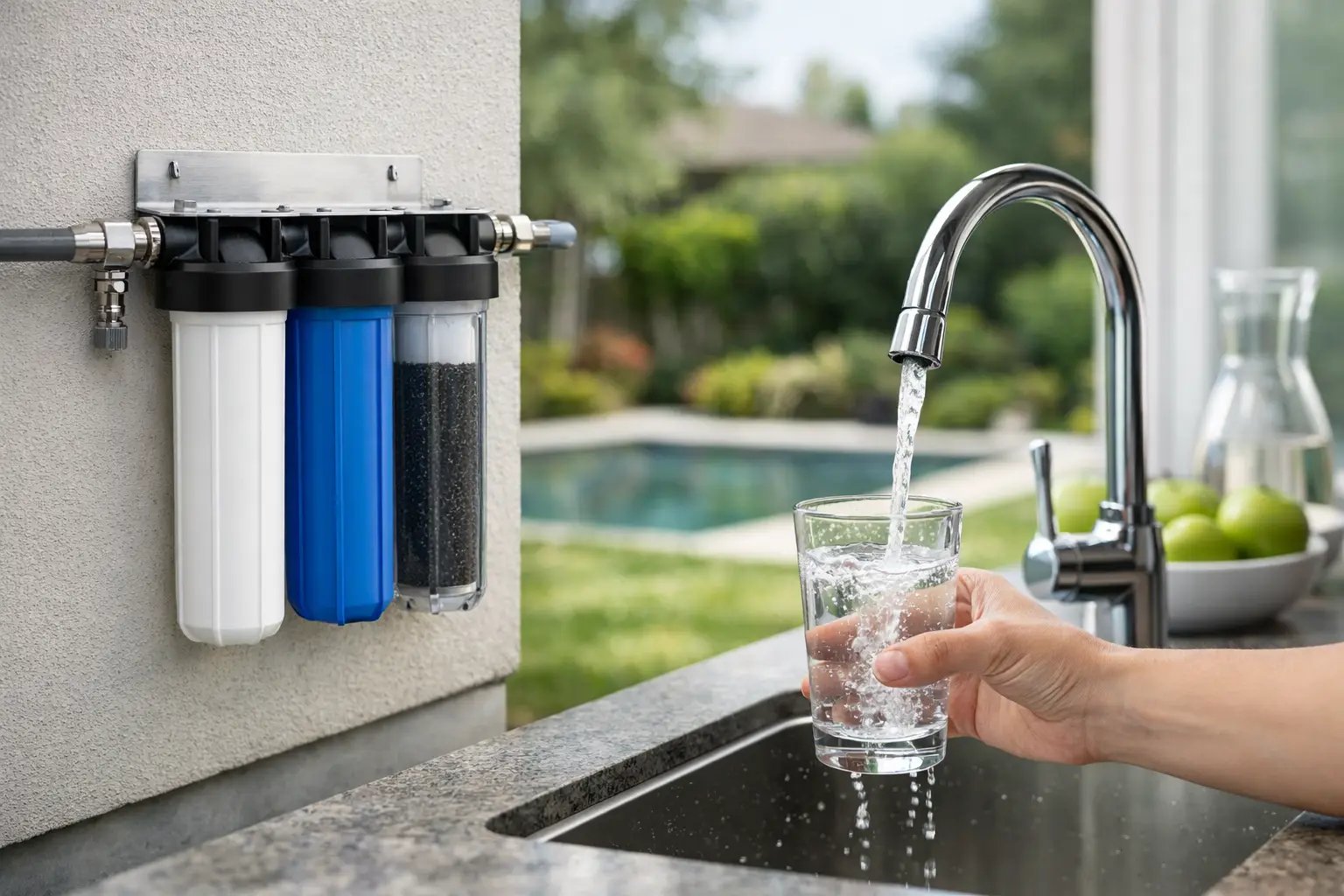
For households that want better water from every tap, a whole-house filtration system is usually the most complete option. Installed at the point of entry, it treats the water before it moves through the rest of the plumbing. That means the kitchen, bathrooms, laundry and outdoor taps can all benefit, depending on the system design.
This approach makes sense when water quality is affecting more than drinking water alone. It can reduce sediment, lower chlorine exposure, help manage scale-related issues and improve overall water feel throughout the house. That often translates into better-tasting water, cleaner showering, less build-up on fittings and less stress on appliances.
A multi-stage system is particularly useful because different filter media do different jobs. A pleated sediment filter can capture dirt, rust and suspended particles. Carbon filtration can help reduce chlorine, odour and certain organic contaminants that affect taste and smell. Depending on the setup, scale-reduction components can also support plumbing and appliance protection in homes dealing with mineral-heavy water.
The trade-off is upfront investment. A whole-house system costs more than a jug filter or under-sink cartridge. But for many families, it is the more practical long-term choice because it addresses the whole household rather than one small part of it.
Why single-tap filters are not always enough
Point-of-use filters still have a place. They can be suitable for renters, apartments, or households that only want to improve drinking water at one outlet. They are generally cheaper to start with and easier to fit in a limited space.
The limitation is obvious once you think beyond the kitchen sink. They do not help with chlorine in the shower, sediment in the laundry, or mineral build-up in your plumbing. If your concern is wellness and home protection as much as taste, a single-tap solution can feel like only half a fix.
That is often why homeowners upgrade later. They start with a smaller filter, then realise the bigger issue has not actually gone away.
Professional installation matters more than many people expect
A filtration system is only as reliable as its installation. Poorly fitted housings, incorrect pressure setup or the wrong product for the property can create avoidable problems. That is one reason many homeowners prefer a supplied-and-installed service rather than piecing together a DIY setup.
A licensed plumber can assess where the system should be installed, whether any pressure considerations need to be addressed, and how to integrate it properly with the home’s existing plumbing. That removes guesswork and helps ensure the system performs as intended from day one.
For households in Western Australia, local knowledge matters as well. Water conditions are not identical from one suburb to the next, and homes on mains, bore or rainwater can have very different needs. A provider that understands those local conditions can usually recommend a more appropriate setup than a one-size-fits-all online purchase.
Don’t forget maintenance
Even the best filtration system needs ongoing care. Filters do not last forever, and delayed replacement can reduce performance. In some cases, an overdue cartridge can restrict flow or allow taste and odour issues to return gradually, which homeowners may not notice straight away.
That does not mean maintenance is difficult. It simply means it should be part of the plan from the start. Ask how often filter stages typically need replacing, what signs suggest a service is due, and whether replacement components are easy to source. A system that is simple to maintain is far more likely to keep delivering the result you paid for.
What a better water setup can change day to day
When people ask how to improve water quality at home, they are usually thinking about drinking water first. In practice, the benefits can show up all through the house. Tea and coffee often taste cleaner. Cooking water smells better. Showers feel more comfortable. Glassware can come out cleaner, and appliances may deal with less scale and sediment over time.
There is also a lifestyle benefit that should not be ignored. When the right system is installed properly, you stop thinking about the water every time you turn on a tap. That peace of mind matters, especially for busy families who want one reliable solution rather than a collection of small workarounds.
For homeowners who want a practical, professionally installed answer, Aqua Mantra Filters focuses on whole-house systems designed to improve water quality across the entire home, not just at one outlet. That approach suits households looking for cleaner water, easier setup and long-term protection for both wellness and plumbing.
Better water at home does not have to mean a complicated decision. Start with the issues you can see, smell and feel, get the water assessed properly, and choose a solution that fits the whole way your household uses water every day.