If your water smells like chlorine in the shower, leaves scale on taps, or just never tastes quite right, the whole house filter vs under sink question is not really about one tap. It is about how you want water to perform across your home, from the kitchen glass to the bathroom basin, laundry and hot water system.
For many Perth households, this choice comes down to two very different goals. One system improves the water you drink at a single outlet. The other treats water as it enters the property, so every tap and appliance benefits. Both have a place. The right option depends on whether your main concern is drinking water alone, or the wider effect of chlorine, sediment and minerals throughout the home.
Whole house filter vs under sink: the real difference
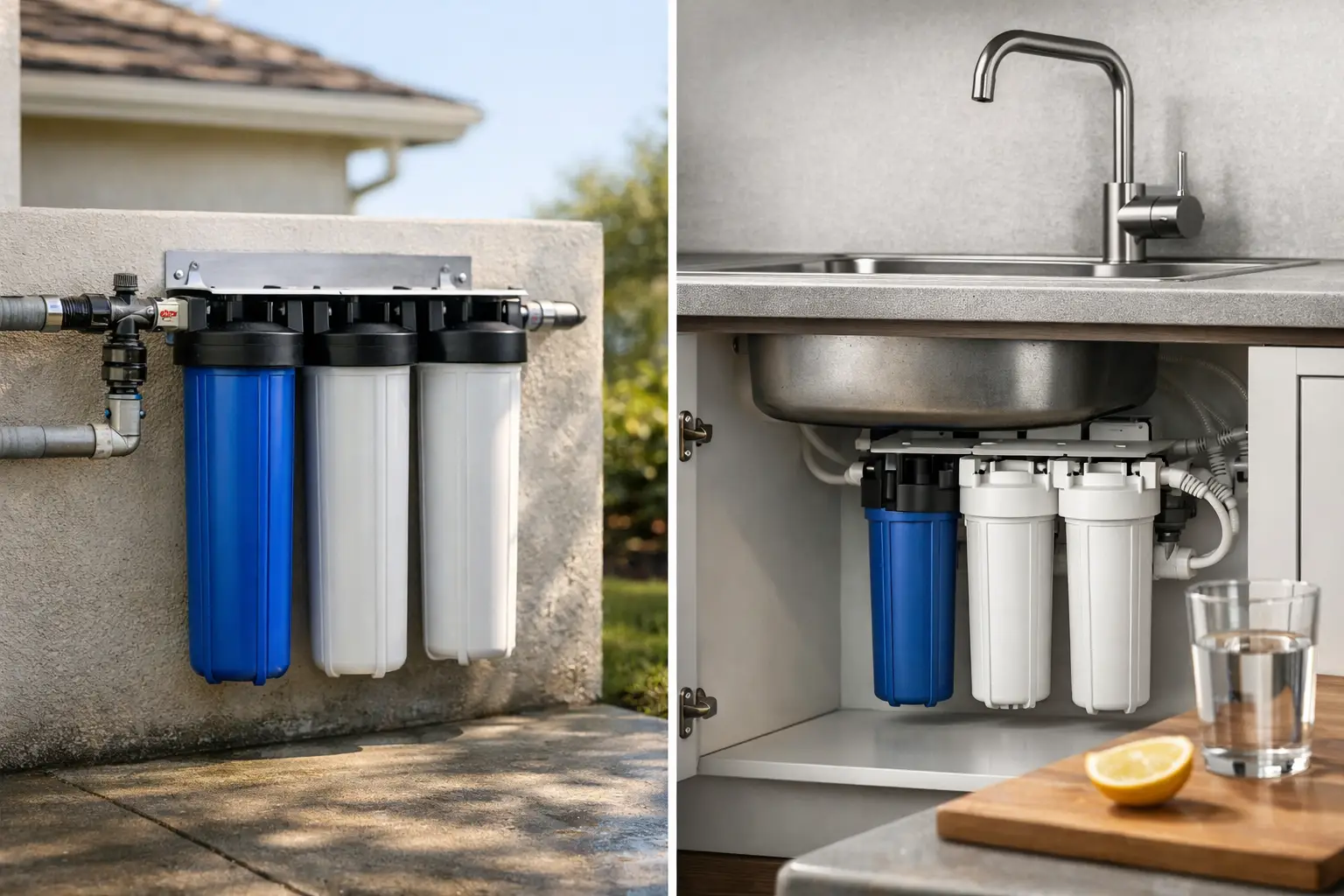
An under sink filter is a point-of-use system. It is installed at the kitchen sink and treats water at that one location, usually for drinking and cooking. If your main priority is better tasting water from one tap, this can be a practical solution.
A whole house filter is a point-of-entry system. It is installed on the main water line so filtered water reaches the kitchen, bathrooms, showers, laundry and outdoor taps, depending on the setup. That means the benefits extend beyond taste. You are also addressing what touches your skin, hair, plumbing and appliances every day.
This is the key difference people often miss. Under sink filtration is about a smaller use case. Whole-house filtration is about the home environment.
When an under sink filter makes sense
There are households where an under sink system is a reasonable fit. If you rent, have a very tight budget, or only want to improve the taste and odour of water used for drinking, it can do the job. It is also useful when the rest of the home water is not causing major issues.
For example, if you are happy with your showers, not seeing much sediment, and your appliances are not struggling with scale build-up, an under sink filter may feel like enough. It gives you cleaner water where you fill the kettle, cook pasta and top up drink bottles.
That said, its limits are clear. It does not help with chlorine exposure in the shower. It does not reduce sediment flowing through the washing machine. It does not support the lifespan of taps, hot water systems or dishwashers across the house. It solves one problem well, but only one.
When a whole-house filter is the better fit
If you notice dry skin after bathing, a chlorine smell in the bathroom, visible sediment, hard water staining, or ongoing scale on fixtures, a whole-house system usually makes more sense. It is designed for households that want broader protection and a more consistent water experience.
This matters in Perth and across WA, where water conditions can vary and treated supply often brings common complaints around chlorine, hardness and sediment. In homes on rainwater or groundwater, there can be additional concerns with particles, organics and water clarity. Treating water at entry gives you one central solution rather than patching symptoms room by room.
A properly specified whole-house system can improve not only drinking water but also showering, washing and general household water performance. That means softer-feeling showers, less residue on surfaces, reduced build-up in plumbing and better support for appliances that rely on cleaner water to operate efficiently.
The wellness factor people often overlook
Most people first think about filtered water in terms of what they drink. Fair enough. But what runs over your skin and hair every day matters too.
Chlorinated water can leave some people feeling dry or irritated, especially in homes with frequent shower use, young children, or anyone with sensitive skin. If your household is trying to improve water for wellbeing, not just taste, a whole-house system has a clear advantage. It supports a healthier water experience throughout daily routines, not only at the kitchen sink.
This is often where the comparison shifts. Once you start thinking beyond the glass of water in your hand, under sink filtration can feel too narrow.
Cost: cheaper upfront or better value over time?
An under sink filter almost always looks more affordable at the start. It is smaller, simpler and treats one outlet only. For that reason, it appeals to people who want the lowest entry cost.
But upfront price is only part of the story. If your broader water quality is affecting showers, tapware, hot water systems or whitegoods, the cheaper option may not be the better value. A whole-house system asks for a larger initial investment, but it also serves the entire property. In many homes, that means fewer compromises and better long-term protection.
There is also the matter of maintenance and installation quality. A professionally supplied and installed whole-house system can remove a lot of guesswork. You are not trying to piece together a solution or hope a generic product matches local water conditions. You get a system selected for your home and installed correctly by a licensed plumber, which matters for compliance, reliability and peace of mind.
Installation and convenience
This is where lifestyle matters as much as filtration performance.
An under sink filter is often seen as the easier option, but that depends on the setup. Space under the sink can be limited. Existing plumbing can complicate the install. Filter changes are tucked into a cupboard and easy to forget.
A whole-house system is more substantial, but it is also more straightforward in use once installed. One central filtration point means one coordinated system servicing the home. For busy households, that convenience matters. You do not want to think about whether one tap is filtered and another is not. You just want confidence that your water is being treated where it counts.
For homeowners who value a hassle-free result, professional installation is not a small detail. It is part of the solution.
Whole house filter vs under sink for Perth homes
For local households, the answer often comes back to what problem you are trying to solve.
If the complaint is limited to drinking water taste, an under sink unit may be enough. If the complaint includes chlorine in the shower, mineral build-up, sediment, dry skin, dull hair, or concern for plumbing and appliances, a whole-house filter is usually the more complete answer.
That is why many established homeowners, renovators and families end up leaning towards point-of-entry filtration. It matches how they actually use water. They are not only filling glasses. They are bathing children, washing clothes, running dishwashers and protecting the home they have invested in.
A service-led approach also makes a difference here. Aqua Mantra Filters focuses on supplied and installed whole-house systems because many customers are not looking for another DIY product decision. They want someone to assess the water issue, recommend a suitable setup and complete the installation properly.
Which system should you choose?
Choose an under sink filter if you want a lower-cost way to improve water for drinking and cooking at one outlet, and you are not worried about the rest of the home’s water quality.
Choose a whole-house filter if you want cleaner water at every tap, broader support for skin and hair, less exposure to chlorine and sediment throughout the home, and added protection for plumbing and appliances.
For most owner-occupiers planning to stay in their home, the second option tends to deliver more day-to-day value. It aligns with wellness, convenience and long-term home care rather than just one kitchen fix.
The best choice is the one that matches your real problem, not just the cheapest product on paper. If your water concerns follow you from the sink to the shower and into the laundry, it may be time to stop treating one tap and start thinking about the whole home.