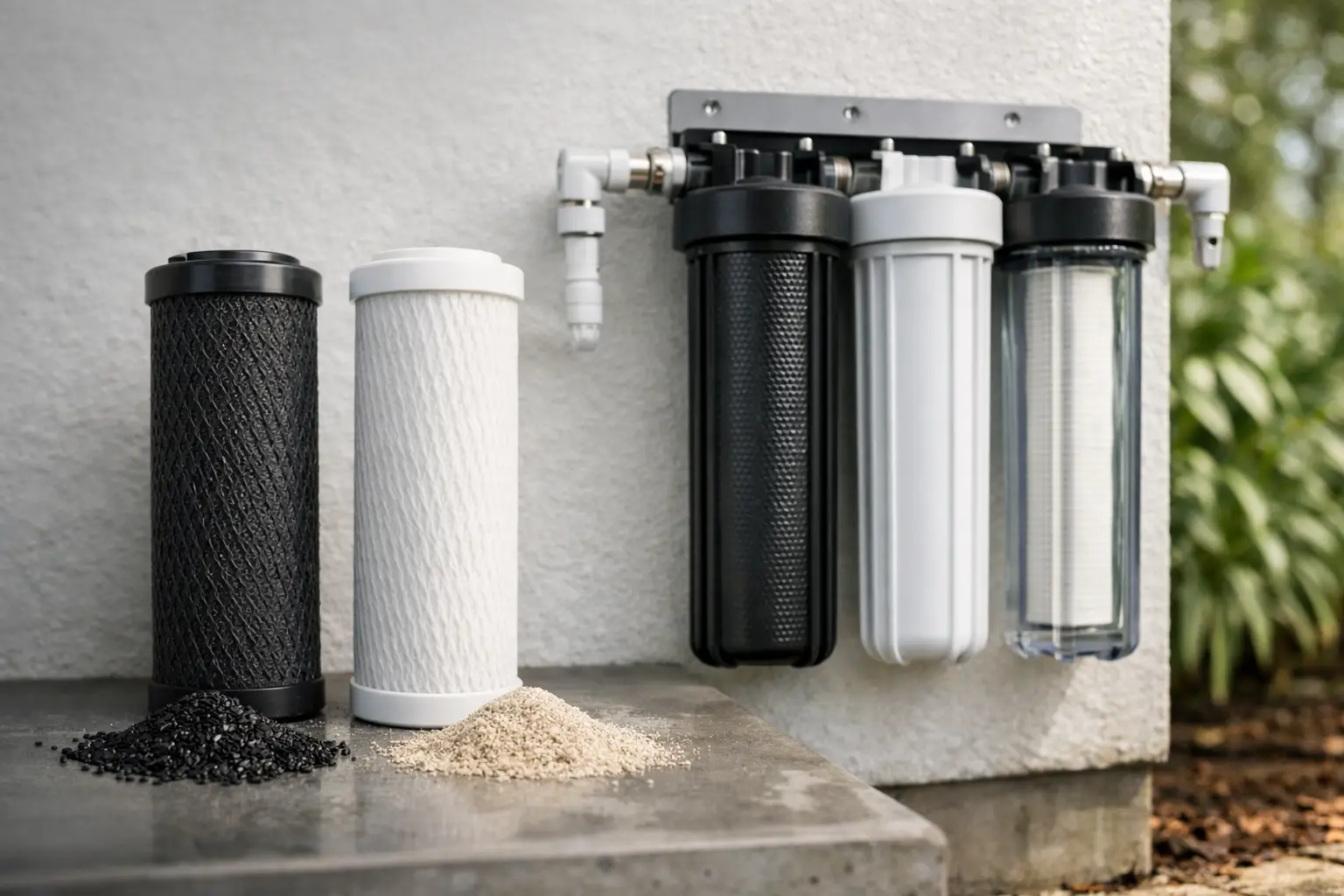
If your water leaves grit in the kettle, dries your skin out after a shower, or carries that strong chlorine smell at the tap, the carbon block vs sediment filter question matters more than most homeowners realise. These two filters do very different jobs, and choosing the right one – or more often, using both together – can make a big difference to water quality across your home.
For Perth and WA households, this is not just a technical detail. Local water can bring a mix of sediment, chlorine, minerals and organic matter, depending on whether you are on scheme water, bore water or rainwater. A filter that works well for visible particles may do very little for taste, odour or chemical reduction. On the other hand, a filter designed for chlorine and organics can clog quickly if sediment is not dealt with first.
Carbon block vs sediment filter: what is the difference?
A sediment filter is designed to catch physical particles suspended in water. That includes sand, silt, rust, dirt and other debris that you may or may not be able to see. Its main role is protection – for your plumbing, your appliances and any filters that come later in the system.
A carbon block filter is designed to reduce chlorine, unpleasant tastes and odours, and many organic contaminants. Depending on the type and rating, it can also help with finer particulate matter. Its role is more about water quality, comfort and everyday wellness.
That is the simplest way to think about carbon block vs sediment filter. One targets particles. The other targets chemical and organic issues.
What a sediment filter actually does
Sediment filters are often the first stage in a whole-house filtration setup because they act as a barrier against larger material entering the system. If your water supply carries grit, rust flakes from ageing pipes, or fine dirt after infrastructure works, this stage helps stop those particles travelling through the home.
That matters for more than appearance. Sediment can shorten the life of washing machines, dishwashers, hot water systems and tapware. It can also interfere with later filter stages by blocking them prematurely.
The effectiveness of a sediment filter depends heavily on its micron rating. A higher micron rating catches larger particles, while a lower rating captures finer material. The trade-off is flow. Very fine sediment filtration can reduce pressure if the filter is undersized or overdue for replacement.
In a residential setting, sediment filtration is often chosen to improve water clarity and protect the rest of the system rather than to improve taste or smell. If your main complaint is cloudy water, visible particles or recurring build-up in fixtures, this stage is essential.
What a carbon block filter actually does
Carbon block filters are made by compressing activated carbon into a solid block. This structure gives water more contact time with the carbon media, which helps it adsorb chlorine and other unwanted compounds more effectively than a basic loose-fill carbon cartridge.
For many households, this is the stage that makes water feel better to live with. Chlorine smell is reduced. Drinking water tastes cleaner. Shower water can feel gentler on skin and hair. That can be especially noticeable in homes where mains water has a strong treated smell or where family members are sensitive to dryness and irritation.
Carbon block filters can also help reduce some volatile organic compounds and other chemical contaminants, though exact performance depends on the cartridge specification. What they are not designed to do well is handle heavy sediment loads on their own. If dirty water hits a carbon block first, the cartridge can foul quickly and lose efficiency.
Why most whole-house systems use both
For most homes, carbon block vs sediment filter is not really an either-or decision. It is a sequencing decision.
A well-designed whole-house filtration system usually places a sediment filter first, followed by carbon filtration. That order makes sense because the sediment stage removes the particles that would otherwise clog the carbon block. Once those physical contaminants are out of the way, the carbon filter can do its job properly on chlorine, odours and organics.
This staged approach also tends to be more cost-effective over time. Replacing a sediment cartridge is generally less expensive than replacing a carbon block that has been overloaded with dirt and rust. More importantly, each stage lasts closer to its intended service life when it is doing the job it was built for.
For households wanting cleaner water from every tap, this is where whole-house filtration stands apart from a single under-sink unit. It supports not only drinking water, but also showers, laundry, bathing and appliance protection.
When a sediment filter matters most
Some properties need sediment filtration more urgently than anything else. This is often the case if you are on rainwater, bore water, or ageing plumbing infrastructure. It can also matter in areas where water main works disturb debris in the line.
If you notice particles in toilet cisterns, build-up in aerators, or discoloured water after taps have been off for a while, sediment is likely part of the problem. In these cases, installing carbon filtration without a proper pre-filter is usually false economy.
Sediment filters are also important in homes with expensive appliances or recent renovations. Fine debris travelling through the system can affect mixers, shower heads and water-using appliances long before it becomes obvious at the kitchen sink.
When a carbon block matters most
If your biggest issue is chlorine smell, poor taste, dry skin after showering or water that feels harsh, carbon filtration is often the stage delivering the change you will notice most. This is especially relevant in metropolitan areas where treated mains water is safe to drink but not always pleasant to use throughout the day.
Families often focus first on drinking water, but carbon filtration at the point of entry can improve daily comfort across the home. That includes bathing children, washing hair, filling pet bowls and cooking with cleaner-tasting water.
There is also a home care benefit. Water with high chlorine content can be tough on rubber seals, fixtures and some plumbing components over time. While not every issue comes back to chlorine alone, reducing the chemical load can support overall water performance.
Carbon block vs sediment filter for Perth homes
Perth homes can face a mix of concerns rather than a single water issue. Scheme water may carry chlorine and affect taste and odour, while some properties also deal with sediment or mineral-related problems. Homes using alternative water sources can see even greater variation.
That is why a one-size-fits-all answer rarely works. In one home, a basic sediment stage may be enough to protect plumbing and improve clarity. In another, carbon filtration may be the real driver of better everyday water. In many cases, both are needed as part of a broader 3-stage setup that also considers scale and long-term appliance protection.
This is also where professional assessment matters. Filter choice should match the actual water conditions, household size, and expected flow requirements. A system that is too small, too fine, or poorly staged can create pressure issues and higher replacement costs.
How to choose the right setup
The best choice comes down to what you are trying to fix.
If the issue is visible dirt, grit, rust or cloudy water, start with sediment filtration. If the issue is chlorine, smell, taste or water that feels harsh on skin and hair, carbon block filtration should be part of the solution. If you want broad whole-house improvement, you will usually need both in the correct order.
It is also worth thinking beyond the filter cartridge itself. Housing size, water pressure, service intervals and installation quality all affect performance. A good filtration system should not just remove contaminants. It should suit the home, protect flow and be easy to maintain over time.
For homeowners who want a reliable outcome without trial and error, a supplied-and-installed system is often the safer path. Aqua Mantra Filters focuses on whole-house solutions that are matched to local conditions and installed by a licensed plumber, which helps take the guesswork out of choosing the right filter stages.
The mistake to avoid
The most common mistake is assuming one filter can do everything. A sediment filter will not remove chlorine odour. A carbon block should not be expected to manage heavy sediment on its own. When the wrong filter is used for the wrong problem, results are disappointing and maintenance costs rise.
The better approach is to treat filtration as a system, not a single component. Once each stage has a clear job, your water quality tends to improve in a way you can actually notice – cleaner taste, less odour, better shower comfort and more protection for the home.
If you are weighing up carbon block vs sediment filter, the right answer is often the one that addresses your actual water conditions rather than the one that sounds most advanced. Cleaner water starts with getting the basics right.