If your water smells like chlorine in the shower, leaves scale around taps, or makes your skin feel tight after washing, a basic under-sink filter will not fix the bigger problem. Knowing how to choose whole house water filtration system options starts with one simple question: what is happening to the water before it reaches every tap, appliance and bathroom in your home?
For many Perth and WA households, the answer is not just one issue. It can be a mix of sediment, chlorine, hard minerals and organic matter. That is why choosing a system should never come down to price alone. The right setup needs to suit your water source, your household size, your plumbing and the outcomes you actually care about, whether that is better tasting water, healthier skin and hair, or protection for pipes and appliances.
How to choose whole house water filtration system for your home
A whole-house system, also called point-of-entry filtration, treats water as it enters the property. That means filtered water is delivered throughout the home rather than at one kitchen outlet. For families who want cleaner water for drinking, showering, cooking, washing and general household use, this approach makes far more sense than adding separate filters in different places.
The first step is to identify the problem you want solved. Some homes mainly struggle with chlorine taste and odour. Others notice gritty sediment, staining, limescale build-up or poor water feel on the skin. Bore water and rainwater setups can bring their own challenges as well. If you are trying to solve the wrong problem, even a high-quality filter can feel disappointing.
That is why a proper assessment matters. Water conditions vary from suburb to suburb, and what works well in one home may be the wrong fit in another. A professional recommendation should consider not just the water itself, but how the household uses it every day.
Start with your water quality concerns
Most homeowners do not need a chemistry lesson. They need clarity on what is affecting comfort, health and the home. In practical terms, there are a few common issues that drive the decision.
Chlorine is one of the biggest complaints in metro water. It can affect taste and smell, but it also changes the shower experience. Many people notice drier skin, duller hair and a stronger chemical smell in bathrooms and laundries. If that sounds familiar, carbon-based filtration is usually a major part of the solution.
Sediment is another common issue, especially where ageing infrastructure or local supply conditions allow fine particles into the water. Sediment can make water look cloudy, clog fixtures and shorten the life of other filters if it is not handled early in the filtration process.
Hard water is slightly different because it is less about visible dirt and more about dissolved minerals. These minerals can leave white scale around taps, kettles, shower screens and appliances. If scale build-up is part of the problem, you need to think beyond taste and include protection for your plumbing and hot water system.
Organic matter and general impurities can also affect water quality, especially in non-mains water setups. In these cases, a multi-stage system is often the better choice because no single filter media does everything well.
Why one filter stage is rarely enough
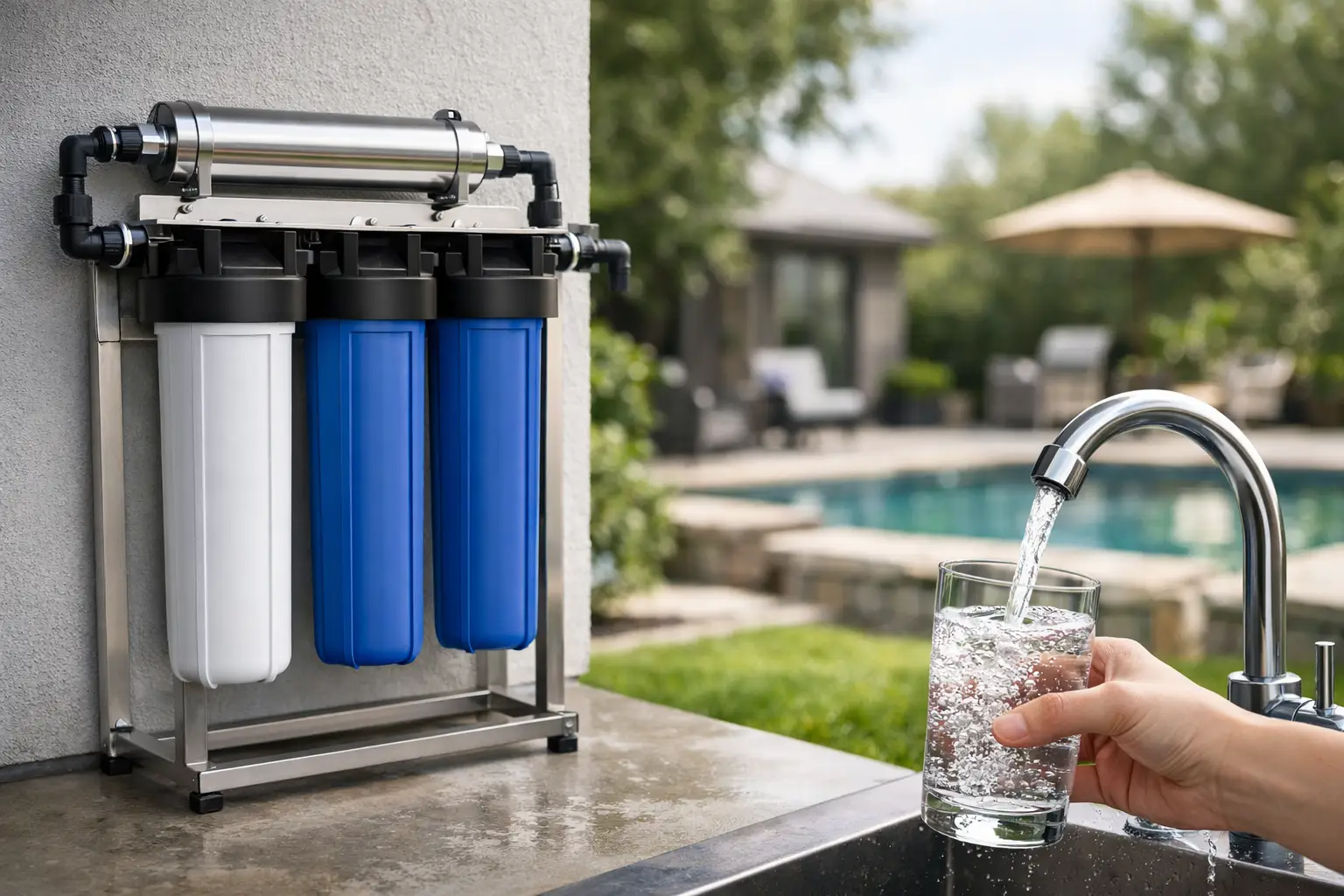
A single filter cartridge may remove one type of contaminant well, but households usually need broader coverage. This is where a 3-stage system becomes a practical option.
A staged setup allows each filter to do a specific job. A sediment or pleated pre-filter can catch larger particles and help protect the filters that follow. Carbon block stages can then target chlorine, odours, taste issues and certain organic contaminants. If scale reduction is needed, a dedicated stage can be built in to help reduce mineral-related problems.
This layered approach is more balanced than relying on one all-purpose cartridge. It usually delivers better overall performance and can extend filter life when each stage is doing the work it is designed for.
Think about flow rate, not just filtration
One of the most common mistakes when learning how to choose whole house water filtration system products is overlooking flow rate. A system may sound impressive on paper, but if it restricts water too much, daily use becomes frustrating.
Your filtration system has to keep up with real household demand. That includes showers running at the same time, the washing machine filling, toilets flushing and taps being used in the kitchen. If the system is undersized, pressure drop and poor flow can become a problem.
This matters even more in larger homes or busy family households. The right unit should be sized to your plumbing and peak usage, not just the minimum needed for one person filling a glass. Good filtration should feel easy to live with.
Match the system to your home and plumbing
Not every property has the same installation requirements. The available space near the water entry point, pipe layout, existing pressure and local plumbing standards all play a part in what can be installed and how well it will perform.
This is one reason many homeowners prefer a supplied-and-installed service rather than trying to piece together a system themselves. Professional installation means the unit is fitted correctly, compliant with regulations and set up for reliable long-term use. It also reduces the risk of leaks, poor placement or using a system that is not suited to the property.
For households that want a straightforward solution, this matters. Water filtration should improve daily life, not create another home maintenance headache.
Look closely at filter media and certification
Not all cartridges are made to the same standard. Two systems may both be described as whole-house filters, yet perform very differently depending on the quality of the housings, the filter media inside them and the certifications behind the product.
For example, antibacterial pleated PP filters can help manage sediment while supporting hygiene and service life. Scale carbon block filters are useful where mineral-related issues are affecting fixtures and appliances. Coconut carbon block filters are often chosen for reducing chlorine, odours and organic compounds while improving taste and overall water feel.
Certification also matters because it gives homeowners confidence that the product meets recognised standards. In Australia, WaterMark certification is a strong trust signal, especially when the system is being installed into household plumbing. If a provider cannot clearly explain what is included and whether the components are certified, that is worth questioning.
Do not ignore maintenance when choosing a system
A whole-house filtration system is not a fit-and-forget product. Filters need replacement at the right intervals to keep performance where it should be. That does not make filtration inconvenient, but it does mean maintenance should be part of the buying decision from the start.
Ask how often the cartridges need changing, what the replacement process involves and whether support is available. A system that is easy to maintain tends to deliver more consistent results because homeowners are more likely to stay on schedule.
This is another area where a service-led provider can make the experience easier. Ongoing support, correct replacement components and clear maintenance guidance remove guesswork and help protect your investment.
Price matters, but value matters more
It is natural to compare systems by upfront cost, but the cheaper option is not always the better buy. A lower-priced system may use lower-grade components, offer limited contaminant reduction, reduce water pressure or require more frequent cartridge changes.
A better way to think about value is to look at the full outcome. Are you getting effective filtration across the whole home? Is installation included by a licensed plumber? Are the filters designed for local water conditions? Will the system help protect taps, appliances and hot water services over time?
When filtration is chosen well, the benefits show up every day. Water tastes and smells better. Showers feel better. Cleaning can be easier. Appliances may last longer. That is real household value, not just a product sitting on the wall.
What a good provider should help you with
You should not have to become a water treatment expert to make a smart choice. A good provider will simplify the decision, ask the right questions and recommend a system based on your household’s actual needs.
That includes understanding whether your main concerns are wellness, taste, sediment reduction, scale control or all of the above. It also includes checking the home’s plumbing setup, selecting the right filter stages and making sure installation is handled properly. For Perth homeowners, local experience matters because water conditions here are specific, and generic advice from overseas websites often misses that.
If a provider focuses only on selling a unit without discussing water quality, flow rate, certification and installation, the advice is probably too shallow. The right conversation should leave you feeling informed and reassured, not confused.
For many families, the best choice is a professionally installed 3-stage whole-house system that balances sediment filtration, chlorine reduction and scale management without making maintenance hard. That is often where performance, convenience and long-term home care come together.
Choosing water filtration is really choosing what you want your home to feel like every day – cleaner, healthier, easier to maintain and more comfortable to live in. If you start with your water concerns and work with a provider who understands local conditions, the right system becomes much easier to spot.